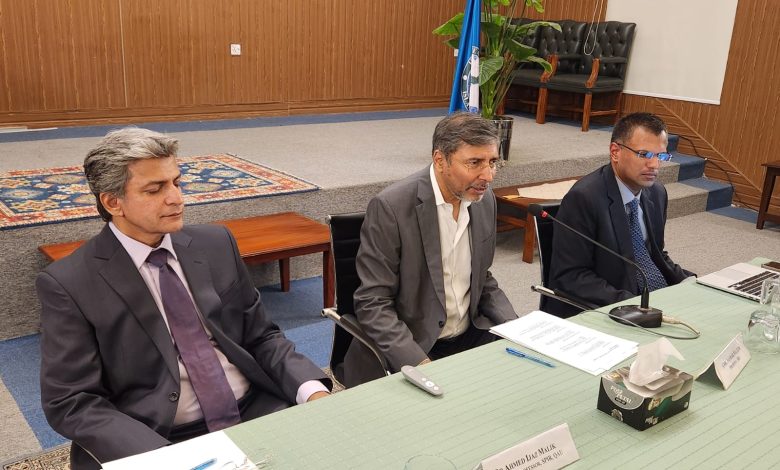
The Institute of Regional Studies (IRS) in Islamabad hosted a significant lecture as part of its Eminent Speaker Series, focusing on the “Political Economies of Central Asia.” Renowned academic Dr. Ahmed Ijaz Malik, an associate professor at Quaid-i-Azam University and a PhD graduate of SOAS, University of London, delivered an in-depth analysis of the socio-economic, political, and strategic dynamics shaping the Central Asian region. The talk highlighted the region’s growing geopolitical importance, regional cooperation initiatives, and opportunities for Pakistan’s engagement.
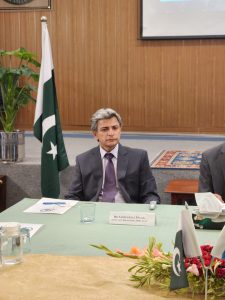
In his address, Dr. Malik emphasized Central Asia’s geopolitical significance owing to its strategic location bridging Russia, China, and South Asia. He pointed out the region’s role as a vital transit corridor for trade and energy across Eurasia. Reflecting on the post-Soviet developments, he noted the diverse paths taken by these nations—from state-led models to market reforms—yet all face common challenges such as economic diversification and reliance on hydrocarbons amidst shifting global energy markets. Countries like Kazakhstan, with vast oil, gas, and uranium reserves; Turkmenistan’s natural gas wealth; and Uzbekistan’s gold and cotton industries, were highlighted as regional energy and resource powerhouses.
The lecture further examined the involvement of global actors in Central Asia’s development. China’s Belt and Road Initiative (BRI), Digital Silk Road, and strategic partnerships with countries like Kazakhstan and Turkmenistan are significantly impacting infrastructure and digital connectivity in the region. Meanwhile, the European Union’s €12 billion Gateway Initiative, part of its Global Gateway strategy, aims to mobilize up to €300 billion for critical sectors including energy, transport, and technology. Russia continues to maintain influence through established security frameworks and transport corridors such as the North-South and Middle Corridors, while newer initiatives like the Trans-Caspian route are also gaining momentum.
Dr. Malik highlighted the recent EU-Central Asia Summit held in April 2025, which underscored the region’s importance by focusing on cooperation in counterterrorism, cybersecurity, border security, and combating hybrid threats like disinformation and trafficking. The speaker also drew attention to regional challenges such as youth unemployment, labor migration, and environmental issues, notably the environmental crisis of the Aral Sea. Despite these obstacles, opportunities in renewable energy, hydrogen technology, rare-earth mineral extraction, and digital innovation present promising avenues for sustainable development.
Addressing Pakistan’s regional strategy, Dr. Malik stressed the importance of forging deeper economic and strategic partnerships with Central Asian states. He pointed to Kazakhstan’s reform efforts in agriculture and petroleum as potential models for Pakistan to emulate. Similarly, Kyrgyzstan’s trade and tourism sectors, Uzbekistan’s pivot toward IT and AI, and Tajikistan’s mineral resources and remittance economy offer substantial cooperation prospects. He also discussed the underexploited potential of the TAPI pipeline, which remains challenged by regional instability but could become a pivotal energy corridor with renewed trust and regional cooperation.
The lecture also explored trilateral collaborations involving Pakistan, Azerbaijan, and Turkey, highlighting recent agreements on trade, military cooperation, and sustainable development as steps toward a broader Eurasian strategic partnership. Dr. Malik concluded by emphasizing the need for Pakistan to develop a comprehensive economic transformation strategy—focusing on agriculture, small and medium industries, and technological hubs—while leveraging trade, sovereign wealth funds, and economic diplomacy to enhance its influence in Central Asia.
The event wrapped up with an engaging Q&A session and was attended by academics, analysts, and students, fostering important discussions on regional geopolitics and economic opportunities.