Islamic Scholars Clarify Birth Spacing for Maternal Health
Mufti Zubair Urges Rethink on Family Planning Misconceptions

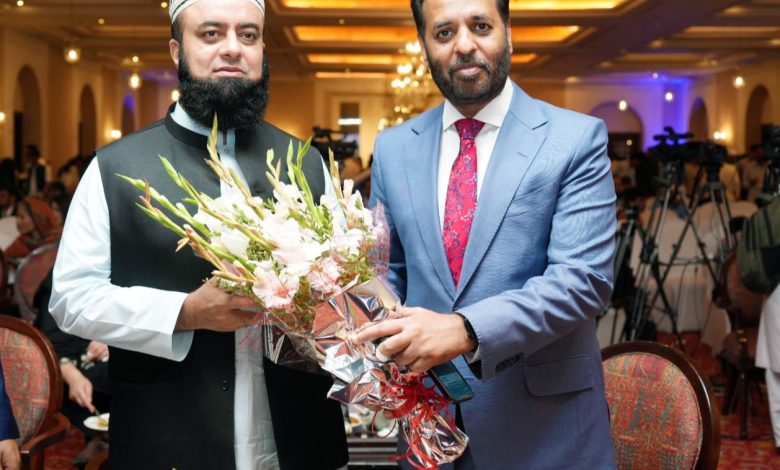
Islamic Scholars Clarify Religious Rulings on Birth Spacing to Address Health Crisis Among Pakistani Women
Nadeem Tanoli
Islamabad: In a powerful address to a public gathering, Mufti Muhammad Zubair, a renowned Islamic scholar and member of the Council of Islamic Ideology, highlighted the urgent need to clarify religious guidance on family planning and maternal health in Pakistan. Addressing religious leaders and public officials, he stressed that Islam does not forbid birth spacing when it is necessary to protect the health and well-being of the mother and child. Misinterpretations, he argued, have led to widespread misconceptions that put lives at risk.
Mufti Zubair began by acknowledging prominent figures in attendance and praising their service to the city of Karachi and the nation. He recalled a significant moment during the tenure of former Prime Minister Raja Pervaiz Ashraf, who declared a national holiday in honor of the Prophet’s sanctity—a decision Mufti Zubair called a matter of faith rather than politics.
Turning to the topic of family planning, Mufti Zubair emphasized that the root cause of Pakistan’s population health crisis is not economics, but maternal health. Quoting verses from the Quran, he reaffirmed that sustenance is provided by Allah, not by humans, and that fear of poverty should not be the reason to prevent childbirth. However, he clarified that Islamic law allows temporary contraceptive methods if future pregnancies threaten the life or health of the mother, or if the well-being and upbringing of the current child are at risk.
He cited the example of a woman giving birth to her twelfth child while critically ill in a hospital. In such extreme cases, he said, insisting on continuous pregnancies is not mandated by Islam. He backed his argument with prophetic traditions and Quranic principles, asserting that even during the Prophet Muhammad’s time, companions practiced birth spacing (‘azl) when needed.
Mufti Zubair criticized both government campaigns and public perceptions for failing to deliver the correct religious message. He noted that official awareness campaigns often tie family planning to financial hardship, saying slogans like “do bachay hi achay” (two children are enough) undermine public trust by seeming to take sustenance into human hands. These narratives, he argued, are rejected by communities with deep faith in divine provision.
On the other hand, at the public level, he warned that many people wrongly equate birth spacing with foreign conspiracies or anti-religious agendas. This ignorance, he stated, endangers women’s lives, especially in rural and underserved areas, where mothers continue to face life-threatening conditions due to back-to-back pregnancies.
To dispel these myths, Mufti Zubair presented fatwas from prominent Islamic institutions, including Darul Uloom Karachi, Binori Town, the Saudi Council of Senior Scholars, and the International Islamic Fiqh Academy under the OIC. These rulings confirm that temporary methods of contraception are permissible when there are valid medical or social reasons. However, he noted, permanent sterilization remains impermissible unless extraordinary medical conditions justify it.
He called for coordinated efforts between religious scholars, government bodies, and media to educate the public. He emphasized that these religious verdicts should be shared through Friday sermons, fatwa centers, and public health campaigns. According to him, regions that are not reached by official campaigns are often not the ones rejecting them—the problem lies where misinformation prevails and where the correct Islamic viewpoint is never conveyed.
Mufti Zubair concluded his speech by urging all stakeholders to move beyond superficial narratives and instead focus on the real issue: the health and safety of mothers and children. He stressed that the teachings of Islam fully support reasonable birth spacing when done with consent and for legitimate reasons, and that this message must be spread with clarity and compassion across the country.