Pakistan Youth Development Dialogue Calls for Empowering Youth Through Skills, Innovation and Environmental Leadership

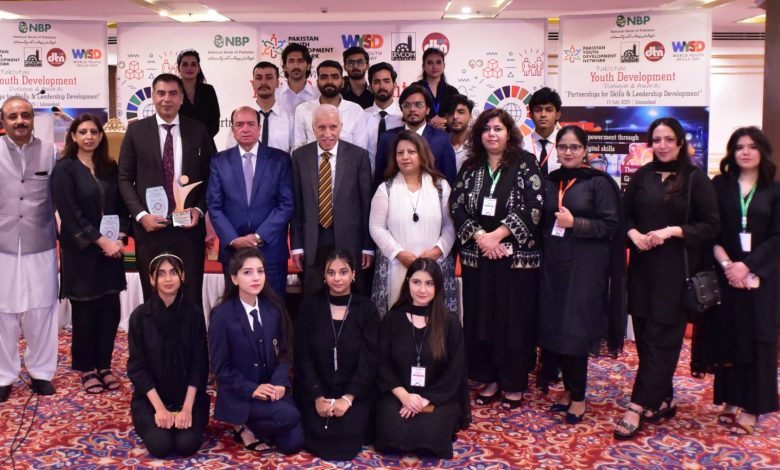
Islamabad: The Pakistan Youth Development Dialogue 2025 convened an inspiring gathering of policymakers, corporate leaders, civil society representatives, and youth advocates to mark World Youth Skills Day, emphasizing the urgent need to place youth empowerment, digital skills, inclusive education, and environmental leadership at the forefront of national development. Organized by Development Communications Network (Devcom-Pakistan) at a local hotel, the high-profile conference underscored collaborative strategies for harnessing the vast potential of Pakistan’s young population.
A major highlight of the event was the formal launch of the “Pakistan Youth Development Network,” led by Devcom-Pakistan’s Executive Director and network founder, Munir Ahmed. In his opening remarks, Ahmed stressed the critical importance of coordinated and holistic national platforms for youth development, noting that integrating young people into skill building, policy-making, and leadership opportunities is vital for Pakistan’s future. “We cannot let this demographic dividend turn into a liability,” he said, pointing out that over 60 percent of the country’s population comprises youth, many of whom feel excluded from developmental processes.
Federal Minister for Investment and Board of Investment, Qaiser Ahmed Sheikh, who attended as the chief guest, reiterated the government’s commitment to fostering an enabling environment for youth’s active participation in national growth. “The youth are Pakistan’s most valuable asset, and investing in their skills and entrepreneurial potential is the only path to sustainable economic progress,” the minister emphasized. Noting the evolving demands of the global economy, he called for aligning national policies with emerging trends to ensure that young Pakistanis stay competitive on the world stage.
Minister Sheikh applauded the initiation of the Pakistan Youth Development Dialogue and the new youth network, noting that such platforms enable effective collaboration between government, corporate, and civil society sectors to advance youth development.
Munir Ahmed further elaborated that today’s youth require not only digital literacy but also entrepreneurial and climate resilience skills, particularly in marginalized and remote communities. “We are not just celebrating Youth Skills Day; we are launching a movement to foreground skills, innovation, and inclusion in our national development agenda,” he added.
The National Bank of Pakistan received three special awards at the event for outstanding contributions in promoting girls’ education, advancing green banking among youth, and supporting youth skill development. The accolades were accepted by Shoaib Qaisrani, Head of the North Region.
Conference speakers offered thought-provoking insights on youth empowerment. Saquib Ahmad, Managing Director for SAP (Pakistan, Afghanistan, Bahrain, and Iraq), highlighted the opportunities created by artificial intelligence and digital transformation, noting, “The real potential lies in equipping youth with the right digital skills and enabling them to lead change.”
Fatima Shuja of Jazz Telecom spoke on the need to convert digital access into real economic opportunities, particularly for women and vulnerable groups, through targeted interventions and inclusive innovation.
Fajer Rabia Pasha, Executive Director of the Pakistan Alliance for Girls Education, stressed that education is not just about literacy but also dignity and autonomy. She stated that collective efforts by civil society and corporate entities can transform the lives of underprivileged girls.
Dr. Ejaz Ahmed, an environmental expert, delivered a keynote on “Youth Leaders for Local Environmental Adaptation,” emphasizing that youth are not just future change-makers but are pivotal agents of change today. “Their local knowledge, creativity, and passion are crucial in devising effective strategies to tackle environmental challenges,” he asserted, encouraging institutions to equip youth with the tools and guidance needed for innovation and leadership.
Dr. Mahvash Ramzan, Head of ESG at Jazz, called on the private sector to go beyond token efforts and to engage youth meaningfully in sustainable development in alignment with global standards such as CSRD.
Umer Mufakkar, President of NATO Youth for Climate Change, highlighted the significance of indigenous knowledge and the need for youth from remote and local communities—those on the frontline of climate impacts—to be at the heart of adaptation planning. “Inclusion is not optional; it is a necessity,” he stressed.
The conference concluded with a strong resolve to unlock the full potential of Pakistan’s youth through youth-centered policies, collaborative programs, and robust public-private-civil society partnerships, ensuring that young people become central contributors to the country’s sustainable development journey.