**Pakistan Urges International Community to “Do More” for Climate Justice Despite Minor Emissions Footprint**
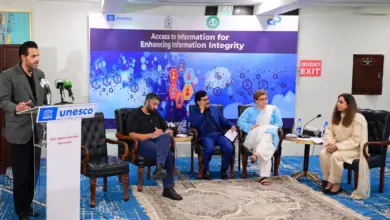
Pakistan has called on developed countries to take greater responsibility for climate justice, emphasizing that although Pakistan’s contribution to global carbon emissions remains below one percent, the country is among the most affected by climate change. Federal Minister for Planning, Development, and Special Initiatives, Professor Ahsan Iqbal, made the appeal during a high-level policy dialogue on environmental protection in Islamabad, organized by Care for South Asia.
Addressing the forum, Minister Iqbal underscored the severity of climate impacts faced by Pakistan, which is home to over 7,000 glaciers—the largest concentration outside the polar regions. He warned that these glaciers are melting rapidly, posing significant risks to Pakistan’s water reserves, agricultural productivity, energy systems, and overall food security. The minister highlighted the vulnerability of the Indus River system, which supports 90% of the country’s agricultural output and is now under serious threat due to climate-induced changes.
Citing the devastating floods of 2022 as clear evidence of mounting climate risks, Minister Iqbal asserted that climate finance for affected nations should not be viewed as charity but as a matter of justice and equity. He emphasized, “The global south has always been asked to ‘do more.’ Now is the time for the global north to ‘do more’ for climate justice.”
The federal minister urged developed countries to fulfil all their environmental commitments, specifically the annual provision of $100 billion in climate finance for countries facing environmental destruction. He called for financial, technical, and institutional support to enable vulnerable countries to enhance resilience and adapt to changing climate realities.
Minister Iqbal further noted that the current government has prioritized climate change as a central pillar of its national development strategy. Under the “5Es Framework,” Pakistan is ensuring integrated policy-making, planning, and institutional responses to confront the climate challenge effectively.
Concluding his remarks, Minister Iqbal appealed to the international community to play a responsible role in ensuring climate justice and to help pave the way for a sustainable and secure future for all.