Leaders of the “Save Swat River Movement” have voiced strong opposition to the current design of the Madian Hydropower Project, warning that it poses severe risks to local communities, the environment, and the region’s tourism-based economy. They have called for the project to be redesigned in consultation with local residents or scrapped entirely if changes are not feasible.
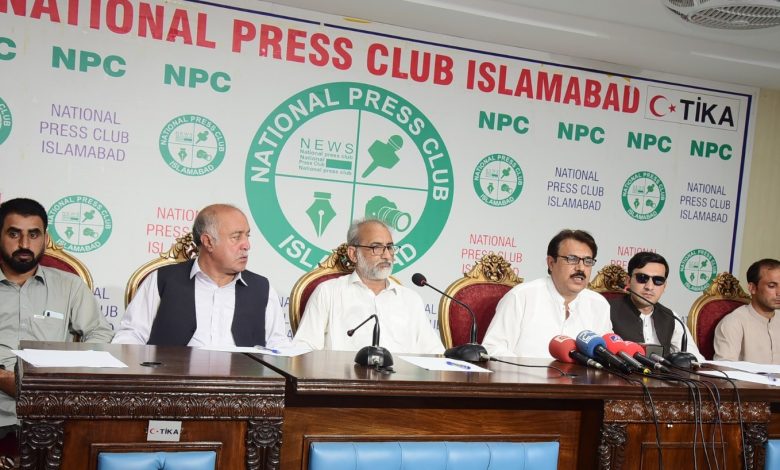
At a press conference in Islamabad, representatives including Zubair Torwali, Inamullah Khan, Sajjad, Mursaleen, and Nisar Ahmad argued that the hydropower project in Tehsil Bahrain, Swat District, is unacceptable in its present form. They insisted that the scheme must minimize harm to both the community and the environment and respect the input of those directly affected. The movement’s leaders emphasized their support for national progress and development, but stated that no project should proceed if it damages local livelihoods, resources, the environment, water sources, or job opportunities.
The concerns focus on four major hydropower projects planned for the Swat River, which proponents say could have devastating consequences. These include the Madian Hydropower Project (207 MW), Asrit Kedam Hydropower Project (229 MW), Kalam Asrit Hydropower Project (239 MW), and Gabrial Kalam Hydropower Project (88 MW). According to activists, all projects involve channeling large stretches of the Swat River through lengthy tunnels, with almost 40 kilometers of river redirected between Madian and Kalam. They warned this will threaten natural springs, amplify flood and environmental risks, and destroy the scenic beauty crucial to the local tourism industry.
The leaders specifically criticized the Khyber Pakhtunkhwa Energy Development Organization (PEDO) and the World Bank, which are collaborating on the Madian and Gabrial Kalam projects as part of a wider hydropower and renewable energy initiative for the region. The Asrit Kedam project, meanwhile, has been licensed to a foreign private company, KOAK. Despite these major developments, local communities—particularly the Torwali, Gujjar, and Gawri peoples—say they have not been properly consulted or provided with free, prior, and informed consent as required by international standards. The activists called this a direct violation of World Bank policy toward indigenous populations.
Environmentalists and local stakeholders argue that these hydropower projects endanger local forests, wildlife, the microclimate, and undermine natural water sources. The region has already experienced three major floods in the past 15 years, increasing fears that large-scale river diversion will intensify future flood risks. Additionally, the activists contend that the projects do not comply with the least-cost principle and will instead produce some of the most expensive electricity in the country. As evidence of feasibility concerns, the Madian and Gabrial Kalam projects have recently been removed from the Indicative Generation Capacity Expansion Plan (IGCEP 2025-2035).
More than 85,000 people are expected to be affected, especially in Bahrain—a prominent tourist destination—and several surrounding villages. The projects risk destroying the natural beauty and resources of areas inhabited by the indigenous Torwali people, placing their traditional livelihoods and ancestral lands at risk.
The movement’s leaders urged the government to prioritize alternative energy sources such as solar and wind, reducing reliance on coal, furnace oil, and even hydropower where it carries significant social and environmental costs. They called on authorities to seriously consider alternative solutions and ensure any energy projects are environmentally sound and serve the genuine interests of local communities.