Masood Seeks National Consensus on Core Curriculum, Rollout by April 2028

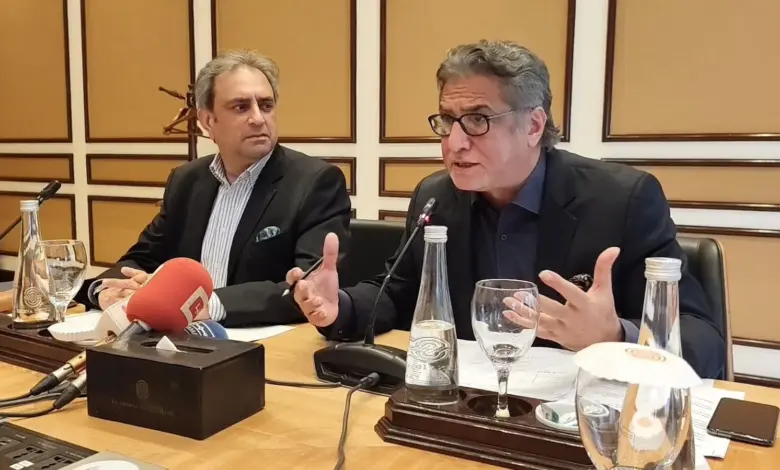
Islamabad, October 13: Former Punjab education minister Mian Imran Masood has called upon the federal and provincial governments to evolve consensus on a common core curriculum and complete its phased implementation by April 2028, saying schools, teachers and publishers need adequate time to prepare for the change.
Speaking at a media briefing on curriculum reforms on Tuesday, Masood said separate curriculum exercises by the federal government, Punjab and Khyber Pakhtunkhwa could lead to uneven learning standards and create difficulties for students who move from one province to another.
He said a coordinated national approach was necessary to ensure that children across Pakistan had access to comparable learning standards, particularly at the foundational and primary levels.
The briefing was held at a time when curriculum development is under way at both federal and provincial levels. The National Curriculum Council is seeking public feedback on the draft National Curriculum Framework 2026 and the proposed curriculum from early childhood education to Grade 5. Punjab has approved a revised primary curriculum for implementation from the 2027 academic year, while Khyber Pakhtunkhwa has issued revised curricula for secondary and higher secondary classes.
Masood said these parallel developments had brought issues of national consistency, provincial autonomy and schools’ practical readiness into sharper focus. He noted that despite the devolution of curriculum responsibilities to provinces under the 18th Constitutional Amendment, broad consistency had been maintained from 2010 to 2026.
He said curriculum was not merely a document but the foundation of the education system, influencing learning outcomes, teacher training, classroom planning and examinations. He also pointed out that Pakistan had a limited school year of about 140 to 145 teaching days, compared with 192 to 220 days in several other countries.
Oxford University Press Pakistan Managing Director Arshad Saeed welcomed curriculum reforms but said their success would depend on careful planning and close cooperation between federal and provincial authorities.
He proposed a shared core curriculum for English, Urdu, mathematics and science, while allowing provinces to include their own history, geography and local context in social studies. He said a common framework could also help avoid duplication of resources and keep textbook costs manageable.
Speakers at the briefing said students needed consistent learning standards at early and primary stages. They emphasised that revised curricula should not be introduced in haste and called for proper time for pilot teaching, textbook development and teacher training.
Oxford University Press Pakistan’s Shazia Asghar also stressed the need for adequate preparation before implementation, saying the transition period should enable teachers and students to adjust to the revised framework and help protect learning outcomes.
Participants said curriculum development must be followed by textbook writing, review and approval, printing, distribution and preparation at the school level. They maintained that the proposed deadline of April 2028 would allow these stages to be completed in an orderly manner.
The briefing concluded with a call for sustained coordination among federal and provincial governments, curriculum bodies, publishers and education experts so that reforms lead to improved learning outcomes and more equitable educational opportunities for children across the country.