Restoration Begins at Badri Pond to Improve Water Security and Climate Resilience in Dera Ismail Khan

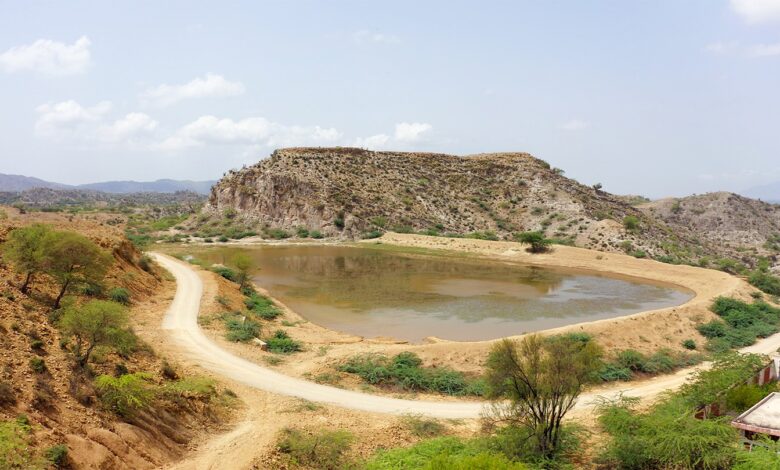
ISLAMABAD: Restoration works have commenced at Badri Pond in Burzawali Village, Dera Ismail Khan, marking a major milestone under the Recharge Pakistan project. The intervention aims to restore one of the area’s important seasonal freshwater systems while improving water security and strengthening climate resilience for surrounding communities. Highlighting the importance of investing in Nature-based Solutions to address Pakistan’s growing climate challenges, Hammad Naqi Khan, Director General, WWF-Pakistan said, “Pakistan’s floods and droughts are symptoms of a changing climate that is placing increasing pressure on our people, ecosystems and water resources. Part of the answer lies in restoring nature’s own capacity to capture, store and regulate water. Investments in ecosystems such as Badri Pond are investments in long-term climate resilience.”
The commencement of physical works at Badri Pond marks a major milestone for Recharge Pakistan, advancing one of the project’s key on-ground Ecosystem-based Adaptation (EbA) interventions to enhance water storage capacity, improve groundwater recharge and strengthen climate resilience. The intervention follows extensive technical assessments, and close collaboration with government partners and local communities to ensure the restoration responds to both ecological needs and local priorities.
Recharge Pakistan is a USD 72.9 million, seven-year climate adaptation initiative implemented by WWF-Pakistan in partnership with the Ministry of Climate Change and Environmental Coordination, the Federal Flood Commission under the Ministry of Water Resources, and supported by the Green Climate Fund (GCF), The Coca Cola Foundation (TCCF) and WWF. Working across Khyber Pakhtunkhwa, Sindh and Balochistan, the project seeks to reduce flood and drought risks, improve groundwater recharge, restore degraded ecosystems and strengthen climate resilience in Pakistan through Nature-based Solutions (NbS).
Carlos Pagoaga, President, The Coca Cola Foundation, said: “Building watershed resilience requires strong collaboration and long-term investment. The Coca Cola Foundation is proud to support Recharge Pakistan as it moves from planning to implementation, delivering practical Nature-based Solutions that aim to improve water security and strengthen communities for generations to come.”
For generations, Badri Pond has served as an important seasonal freshwater source supporting nearby communities, livestock and local biodiversity and ecosystems. Over time, sediment accumulation, blocked natural flow paths and eroded embankments have reduced its capacity to store and retain water, diminishing its ecological functions and increasing water stress for communities. Its restoration provides an opportunity to demonstrate how NbS can restore ecosystem functions while strengthening climate resilience. Highlighting the significance of the intervention, Muhammad Fawad Hayat, Senior Director, Recharge Pakistan at WWF-Pakistan, said: “Badri Pond is a key NbS intervention to move into implementation under the project. Over the coming months, we will restore 415 metres of natural flow paths, desilt one hectare of the pond and reinforce 211 metres of embankments, increasing its water-holding capacity by approximately 20,000 cubic metres. These interventions will strengthen water security for an estimated 2,957 households.”
Hemant Mandal, Director of the Asia and the Pacific Region, at the Green Climate Fund (GCF) said: “The restoration work at Badri Pond is an important milestone in translating climate finance into tangible adaptation outcomes under the GCF-supported Recharge Pakistan project. By restoring natural ecosystems alongside conventional infrastructure, the project demonstrates how nature-based solutions can deliver lasting benefits for both people and the environment.”
The Badri Pond interventions are expected to be completed by the end of 2026 and represent the first of several Nature-based Solutions interventions planned under Recharge Pakistan. Together, these interventions will demonstrate how working with nature can complement conventional infrastructure to reduce disaster risks, improve water security and build long-term resilience in some of Pakistan’s most climate-vulnerable landscapes.