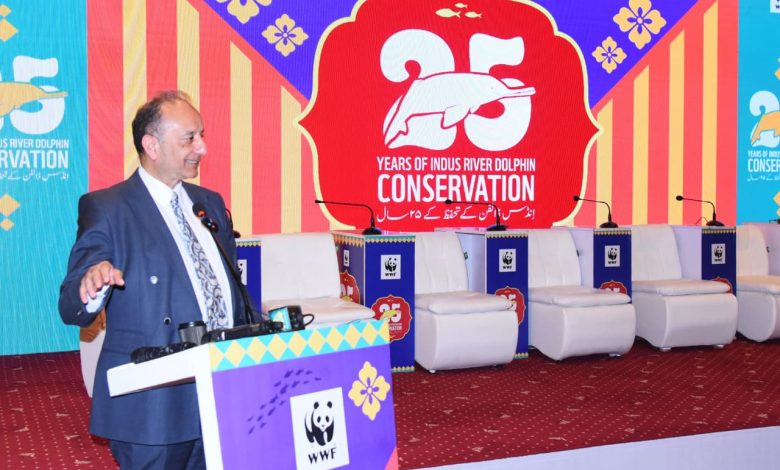
At a WWF conference marking 25 years of conservation for the Indus River Dolphin, Federal Minister for Climate Change and Environmental Coordination Dr. Musadik Malik outlined urgent steps the government intends to take to safeguard the species and its riverine habitat. He praised WWF’s long-term work and said the ministry will work closely with civil society to strengthen protection measures for the Indus River Dolphin.
Dr. Malik warned that rising temperatures and accelerating glacier melt are direct results of unchecked pollution and climate change, threats that compound risks to river ecosystems and to communities that depend on them. He issued a stark warning about the deteriorating water quality of River Ravi, saying the river has become so polluted it is no longer fit for agriculture and certainly not for drinking, a reality that undermines broader conservation goals for the Indus River Dolphin.
The minister highlighted the wider economic and social fallout from climate-driven disasters, noting that recent floods inflicted economic losses exceeding 9.5 percent of Pakistan’s GDP. He emphasized the human toll, reporting that more than 4,700 people lost their lives and over 17,000 were left disabled in the last four major floods, a casualty figure he described as higher than that of any single war in the country’s history.
Reaffirming the state’s commitment, Dr. Malik said the Government of Pakistan stands shoulder to shoulder with WWF and is prepared to align policies and resources to protect biodiversity and ensure environmental sustainability. He framed saving the Indus River Dolphin not only as an ecological imperative but as a moral duty, calling it “a matter of protecting life and humanity” and urging immediate cooperative action to secure the future of the species and the rivers it inhabits.