Public Health Academy With “Most PhDs” Enrolled Zero Students for Three Years

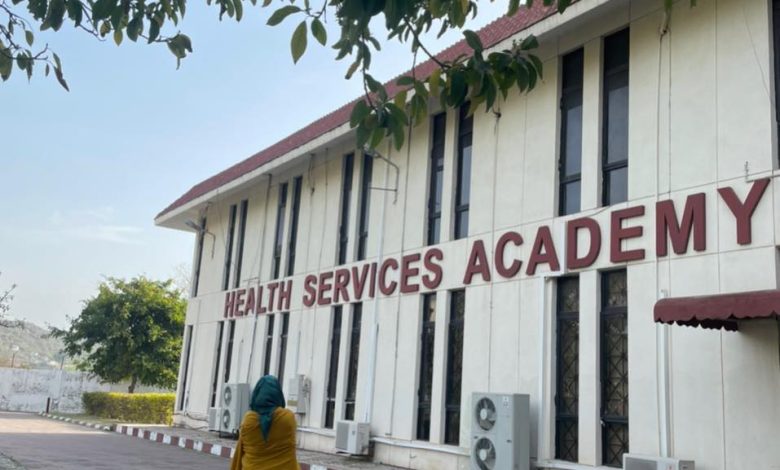
Health Services Academy Under Fire: Senate Questions Years of Inactivity and Dubious Cosmetology Program
Nadeem Tanoli:
ISLAMABAD – The Health Services Academy (HSA), a public health institution under the Ministry of National Health Services, faced sharp scrutiny in the Senate Standing Committee on Health after it presented what many called a “self-congratulatory” report that glossed over a troubling record of stagnation and misaligned academic ventures.
In a recent committee briefing, the HSA Vice-Chancellor praised the academy’s financial independence and high number of PhD faculty, claiming it to be “the only university in Pakistan that can survive without government funding.” However, this bold claim was undercut by a startling admission: the institution failed to enroll any students for three consecutive years—2018, 2019, and 2020—immediately after receiving full university status.
Senators questioned how an institution claiming excellence could go completely dormant for such a prolonged period. The three-year vacuum, described by one committee member as “institutional paralysis,” raised serious doubts about the academy’s leadership and ability to manage the critical transition from a training center to a full-fledged degree-awarding university.
More controversy followed with revelations about HSA’s short-lived Bachelor of Science in Esthetics and Cosmetology program, which has since been discontinued. The move, which fell far outside the academy’s public health mandate, drew criticism for being commercially motivated and in direct conflict with Pakistan Medical and Dental Council (PMDC) regulations. Committee members questioned the rationale behind launching such a program in a public health institution, calling it a “distraction from core responsibilities.”
The academy’s primary achievement highlighted during the briefing was its support role in the National Command and Operation Centre (NCOC) during the COVID-19 pandemic. While that contribution was acknowledged and praised, it was also seen as insufficient to justify the broader claims of academic leadership and impact made by HSA representatives.
Senators urged the institution to realign its priorities and focus on addressing Pakistan’s urgent public health needs—such as infectious disease control, maternal and child health, and preventive care—rather than chasing revenue-generating programs that dilute its mission. They also called for greater transparency in its academic planning and accountability for the years of inactivity.
With healthcare systems across the country facing growing challenges, lawmakers warned that institutions like HSA must deliver more than titles and slogans—they must show measurable impact, academic integrity, and alignment with national health goals.