

**Pakistan, UK Deepen Cooperation on Health Sector Reforms in High-Level Meeting**
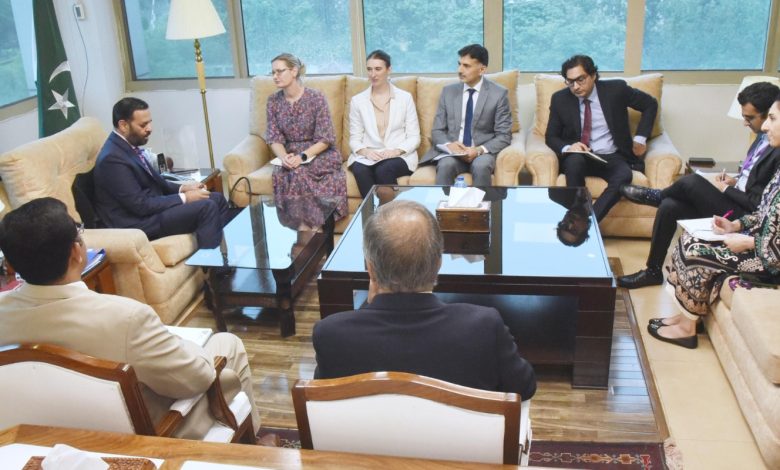
Federal Minister for National Health Services, Syed Mustafa Kamal, held a pivotal meeting with a delegation from the British High Commission, led by Acting High Commissioner and Development Director Ms. Jo Moir, to discuss Pakistan’s health sector priorities and enhance alignment with UK support initiatives. The discussions focused on strengthening healthcare systems, addressing urgent public health issues, and fostering joint efforts for sustainable development.
During the meeting, Minister Kamal expressed appreciation for the UK government’s sustained collaboration and support in Pakistan’s health and population sectors. He outlined some of the nation’s pressing health challenges, particularly the high prevalence of both communicable and non-communicable diseases. The Minister stressed the necessity of shifting towards preventive and promotive healthcare strategies, underlining the need to reinforce primary healthcare systems to alleviate pressure on hospitals and tertiary care facilities.
A key area of concern raised by the Minister was the prevalence of waterborne diseases, which account for nearly 68% of illnesses in the country. He called for intensified efforts to provide safe drinking water and improve sewage infrastructure to combat this public health threat. The issue of Pakistan’s high fertility rate was also highlighted as a critical national challenge. The Minister advocated for immediate and coordinated measures to address population growth, recommending collaboration with stakeholders such as religious leaders and development partners.
To incentivize provincial efforts in population control, Minister Kamal proposed a reform of the National Finance Commission (NFC) Award. He suggested reducing the current 80% weightage based on population to 50%, with the remaining 30% designated as an incentive for provinces demonstrating successful reductions in population growth. The Minister also called for a robust Behavior Change Communication (BCC) campaign to educate men nationwide on family planning and population control.
Representing the UK government, Ms. Jo Moir highlighted ongoing and upcoming support programs in Pakistan. Among them is the DFPAK Initiative, a £120 million project focused on addressing population issues, and the Evidence for Health Program, a £35 million effort aimed at supporting health policy, essential services, universal health coverage, and pandemic preparedness. She also referenced the development of a Global Fund (GF) Accelerator Program, intended to ensure the sustainability of disease control efforts for AIDS, Tuberculosis, and Malaria by integrating them into Pakistan’s regular health systems and implementing institutional reforms for greater efficiency.
Ms. Moir further revealed plans to launch a media campaign, grounded in research, to promote health and population awareness. She commended the Pakistani government’s commitment to sectoral reforms and reiterated the UK’s dedication to supporting Pakistan’s long-term health and population objectives.
The meeting concluded with mutual expressions of gratitude and a commitment to maintaining momentum in health sector progress. Minister Kamal requested in-depth briefings on the GF Accelerator Program and population initiatives to support further advancement. Ms. Moir reaffirmed the UK’s continued engagement with Pakistan’s health and population priorities.


