**Senate Committee Urges Swift Action on Groundwater Laws, Waterway Encroachments, and Nai Gaj Dam Funding**
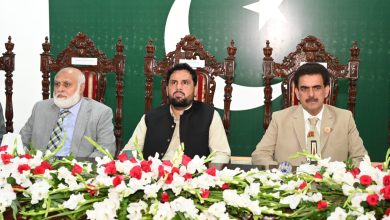
The Senate Standing Committee on Water Resources has called for urgent action to address stalled compliance with its directives, regulatory weaknesses in groundwater management, illegal encroachments on waterways, and delays in key projects including the Nai Gaj Dam. The Committee, chaired by Senator Shahadat Awan, stressed the need for more effective oversight, legislative progress, and administrative follow-through in the country’s water sector.
At the meeting, Committee members voiced concern over the Ministry’s outstanding compliance with recommendations issued across previous sittings. Noting that several directives remain unresolved, the Committee instructed the Ministry to submit a consolidated report detailing implementation status, reasons for delays, and new timelines.
A significant administrative bottleneck discussed was the slow recruitment process at the Federal Flood Commission (FFC), with 16 out of 37 positions remaining vacant. The Committee asserted that such delays undermine the Ministry’s operational effectiveness and requested a follow-up report from FFC within three months outlining recruitment steps taken.
On the legislative front, the Ministry of Water Resources informed the Committee that the long-awaited Dams Safety Bill—developed with input from the Asian Development Bank—was recently submitted for internal review. Officials expect the bill to be ready for introduction in the Senate within three months, pending final vetting.
Encroachments on natural watercourses emerged as another major concern. Senators highlighted a rapid increase in illegal constructions along drains and rivers across Pakistan. The Committee directed the relevant authorities, including the Ministry of Water Resources and local agencies, to accelerate clearances and provide a comprehensive report identifying affected areas, agencies responsible, and action timelines. SUPARCO, responsible for satellite monitoring, was criticized for failing to demonstrate progress in coordinating with FFC on tracking and addressing encroachments. The Committee further directed SUPARCO to coordinate with FFC and the Pakistan Irrigation Department and submit a report within one month. Additionally, the Capital Development Authority (CDA) was unable to provide adequate information on encroachments in Islamabad, prompting the Committee to order a detailed briefing and concrete steps for removal within a month. The Ministry was also instructed to initiate inquiries into negligence or disobedience in tackling encroachments under relevant sections of the Pakistan Penal Code.
The status of the Nai Gaj Dam project, which remains stalled due to lack of federal funding, was also reviewed. WAPDA and Ministry officials attributed construction delays to insufficient allocated funds and rising costs, expressing concern that completion timelines are under threat. The Committee urged the government to approve the third revised Project Concept-1 (PCI) and make necessary funds available promptly, emphasizing the project’s critical role in water management and regional development. Minister for Water Resources, Mr. Moeen Watto, assured the Committee he would personally seek swift approval and release of funds.
The Committee also examined the implementation of the National Water Policy and provincial water regulation laws. While Sindh, Punjab, and Khyber Pakhtunkhwa have passed water acts, their on-ground enforcement remains weak. Balochistan, which has an older law, is planning legislative updates. However, data gaps and lack of enforcement, particularly in KP, where unchecked construction fuels urban flooding and groundwater depletion, were noted as urgent risks. The Secretary of Water Resources highlighted difficulty in coordinating with the provinces, who have been slow to respond to repeated communications. The Committee directed all provincial governments to provide comprehensive progress updates within a month, detailing enacted laws, implementation status, and ongoing challenges.
The session was attended by Ministers, senior WAPDA officials, Senators Poonjo Bheel, Saadia Abbasi, Humayun Mohmand, Saeed Ahmed Hashmi, and Khalil Tahir, as well as representatives from provincial irrigation departments. Concluding the meeting, Chairman Shahadat Awan underscored the need for coordinated governance, prompt institutional reaction, and strict action against encroachments and bureaucratic inertia. He announced that future meetings would require input from law enforcement agencies, including the FIA and NAB, regarding inquiries into WAPDA projects and unresolved cases.