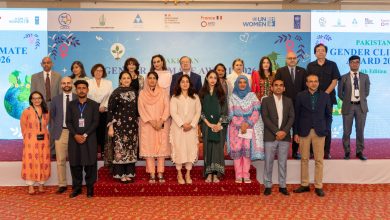
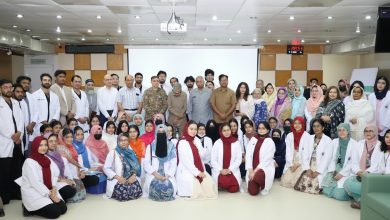
The National Mobility & Independence Training Centre (NM&ITC) recently held a one-week intensive training course on orientation, mobility, and white cane techniques, specifically designed for women with visual impairments. Hosted at the National Institute of Special Education (NISE) in Islamabad, the initiative aimed to boost the confidence and independence of visually impaired women from various regions of Pakistan.
Fourteen women from cities including Layyah, Peshawar, Sargodha, Swabi, Malakand, Haripur, and Mirpur (AJK) attended the program. Participants received hostel accommodation, allowing them to fully engage in both the training and community-building aspects of the experience. Among them was Shumaila Kiran, a member of Pakistan’s National Women’s Blind Cricket Team, reflecting the diversity of the participants.
The course covered both foundational and advanced mobility concepts. Early sessions introduced the importance of orientation and sensory development, alongside familiarization with mobility aids. Practical exercises included self-protection, using sighted guides, moving through narrow spaces, and seating protocols. Participants learned to navigate using a white cane, practicing various techniques such as two-touch, three-touch, slide, diagonal, and pencil grasps, as well as how to safely ascend and descend stairs.
Beyond technical skills, the program fostered a supportive community atmosphere. Recreational activities and indoor games, including accessible versions of Luddo, chess, Nine Men’s Morris, and playing cards, as well as Braille story reading, made the hostel a lively and inclusive environment, encouraging both recreation and bonding among attendees.
At the closing ceremony, certificates were presented by officials from the Directorate General of Special Education and the Ministry of Federal Education & Professional Training. Participants expressed their appreciation for the transformative training, highlighting its role in promoting empowerment and self-reliance. As the country’s first women-focused training of its kind, the program marks an important advance toward greater inclusion and independence for women with visual impairments in Pakistan.