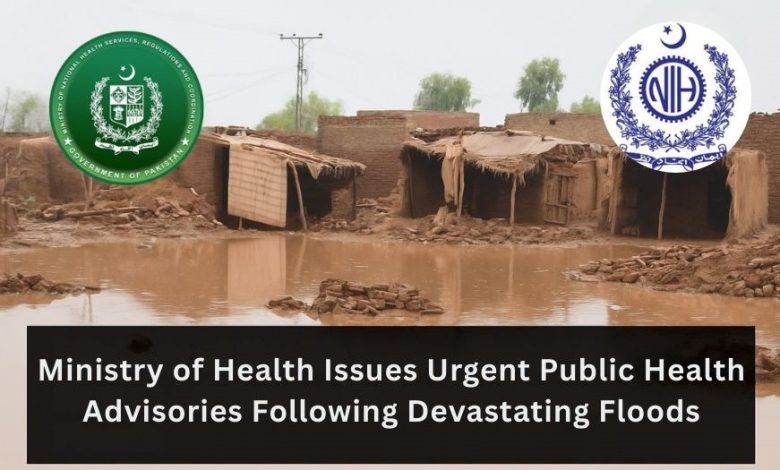
ISLAMABAD – In the aftermath of the unprecedented floods of 2025, the Ministry of National Health Services, Regulations and Coordination (M/o NHSRC), through its research body, the National Institutes of Health (NIH), has released a series of critical public health advisories to curb the growing risk of widespread disease outbreaks.
The Ministry warned that extensive contamination of drinking water supplies and the unchecked spread of disease-carrying vectors have created an environment highly conducive to epidemics. Officials stressed that immediate precautionary action by communities is vital to protect public safety.
Floodwaters have severely compromised clean water sources, raising the likelihood of surges in cholera, typhoid, and other diarrheal diseases. Citizens have been strongly urged to adopt strict hygiene and safety protocols to minimize exposure.
At the same time, the vast pools of stagnant water left behind are serving as breeding grounds for mosquitoes, increasing the threat of vector-borne diseases. Of particular concern are Dengue Fever and Chikungunya, transmitted by Aedes mosquitoes, and Malaria, transmitted by Anopheles mosquitoes.
To guide both communities and local health authorities, the Ministry has released the following advisories for immediate implementation:
-
Prevention and control of vector-borne diseases
-
Prevention and control of food and water-borne diseases
-
Prevention and control of vaccine-preventable diseases
-
Prevention and control of conjunctivitis
The Ministry reaffirmed its commitment to closely monitor the evolving health situation and pledged to issue timely updates as flood recovery efforts progress.
All advisories are available for public access on the official websites of the Ministry of NHSRC and the National Institutes of Health (NIH).