The World Health Organization and UNAIDS joined Pakistan’s Ministry of Health on World AIDS Day to call for urgent action on HIV Pakistan after infections rose 200% in the past 15 years, from 16,000 in 2010 to 48,000 in 2024. Authorities warn that the epidemic is moving beyond traditional high‑risk groups and now affects children, spouses and wider communities through unsafe blood and injection practices, gaps in infection prevention and control, and limited access to testing and care.
Health officials estimate some 350,000 people are living with HIV in Pakistan, yet nearly eight in 10 do not know their status. New childhood infections have climbed sharply, with cases among those aged 0–14 rising from 530 in 2010 to 1,800 in 2023, and several recent outbreaks have disproportionately hit children in Shaheed and Benazirabad, Hyderabad, Naushahro Feroze, Pathan Colony, Taunsa, Mirpur Khas, Jacobabad, Shikarpur and Larkana.
Progress in treatment access has been notable: the number of people on antiretroviral therapy rose from about 6,500 in 2013 to 55,500 in 2024, and antiretroviral therapy centres expanded from 13 in 2010 to 95 in 2025. Yet system gaps remain: in 2024 only an estimated 21% of people living with HIV knew their status, 16% were receiving treatment and just 7% had achieved viral suppression. Over 1,100 AIDS‑related deaths were reported that year.
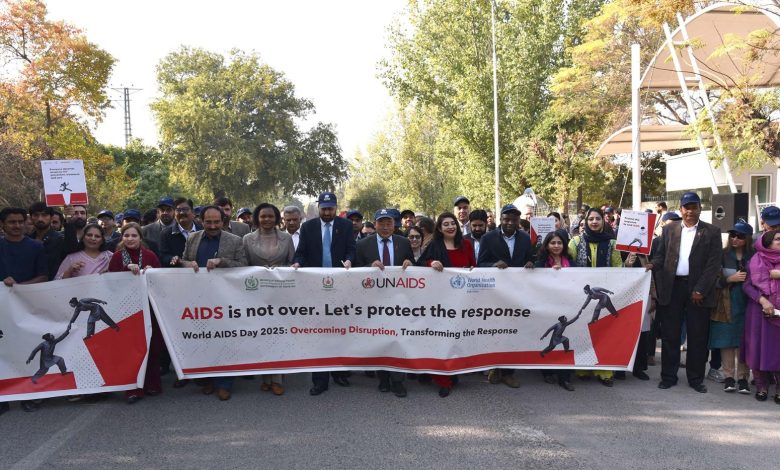
Leaders at the World AIDS Day awareness walk urged collective action. Pakistan’s Health Director General Dr Ayesha Majeed Isani said, “The discrimination, the stigma, and this disease cannot be curtailed only by us. It has to be the communities; it has to be the health regulatory authorities. We need everyone involved to end unsafe practices for injections and blood transfusions.” WHO Representative Dr Luo Dapeng stressed that the surge in cases and outbreaks affecting children demands intensified joint efforts and resource mobilization to protect future generations.
UNAIDS called for renewed international support and programmatic shifts to bridge financing gaps and expand prevention, testing and treatment, particularly for key populations, women and children. Only 14% of pregnant women in need of prevention of mother‑to‑child transmission services currently receive them, and among children aged 0–14 living with HIV only 38% are on treatment, leaving thousands at risk.
Officials urged immediate steps to scale up testing, ensure safe blood and injection practices, integrate HIV testing into antenatal care, reduce stigma, and expand treatment and viral load monitoring. With the goal of ending AIDS as a public health threat by 2030, WHO and UNAIDS pledged continued support to Pakistan’s efforts to accelerate the HIV Pakistan response and protect both present and future generations.