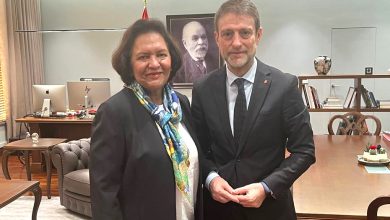
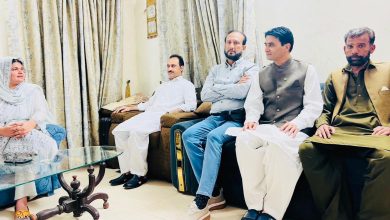
The Institute of Strategic Studies Islamabad’s Centre for Afghanistan, Middle East and Africa (CAMEA) launched its fifth edited volume, ‘Crossroads of Conflict: Transnational Terrorism from Afghanistan to Africa’, edited by Dr. Amina Khan. The event brought together policy experts, academics and diplomats to examine the shifting dynamics of transnational terrorism and its implications for Pakistan and the wider region.
Engineer Khurram Dastagir Khan noted Pakistan’s prolonged struggle with terrorism, citing the APS attack and successive operations including Zarb-e-Azb and Raad-ul-Fasaad. He welcomed the book’s international scope, underlining how transnational terrorism and the flow of foreign fighters—such as those to Syria—require responses that address root causes, strengthen regional cooperation, expand access to education and counter online propaganda.
Ambassador Sohail Mahmood observed that global security remains turbulent as transnational terrorism expands in reach and complexity. He described how instability, fragile political transitions and socio-economic disparities allow violent groups to adapt and extend influence. The volume, he said, offers authoritative examinations of Al Qaeda, ISIS and its affiliates, ISKP, Boko Haram, Al Shabaab, ETIM and TTP, and stresses a coherent approach combining security, diplomacy, law enforcement, development and community engagement.
Dr. Amina Khan explained that CAMEA’s new book provides evidence-based analysis of major and regional actors and explores the political conditions that enable group resilience. She thanked contributors and the editorial team for producing a work intended to support context-specific policy thinking on transnational terrorism.
Dr. Shabana Fayyaz praised the book’s clear theme while noting unresolved tensions between conflict and terrorism and the complications introduced by great power competition. She highlighted a missed opportunity to address gender dimensions more fully and called for broader societal engagement, stressing how digital polarisation shapes recruitment and propaganda efforts tied to transnational terrorism.
Dr. Ishtiaq Ahmad emphasised that terrorism operates as a trans-regional ecosystem, with groups exploiting porous borders and adapting across theatres from ISKP to Al Shabaab. He warned that military action alone will not deliver lasting results and urged attention to grievances in provinces such as Balochistan and Khyber Pakhtunkhwa as part of any durable response to transnational terrorism.
Ambassador Khalid Mahmood reiterated the importance of addressing root causes and state-sponsored violence, underlining that the right to self-determination must not be conflated with terrorism and that terrorism has no religion. Contributors at the event walked through chapter findings that map organisational trajectories, recruitment patterns and trans-border linkages.
Authors, discussants and a wide cross-section of attendees including foreign diplomats, civil society and media took part in the debate, highlighting policy gaps such as inconsistent coordination and uneven institutional capacity. The book was presented as a timely resource for Pakistani policymakers and analysts seeking evidence-based approaches to countering transnational terrorism through regional cooperation, intelligence coordination, improved border management and investment in human security.