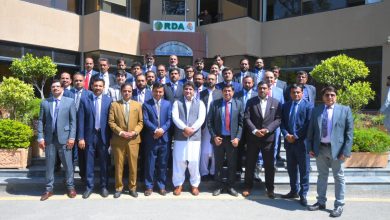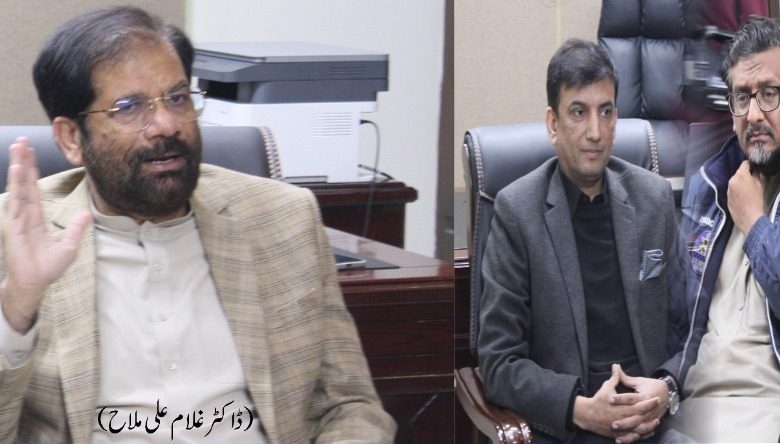
Dr Ghulam Ali Mallah, Executive Director of the Inter Boards Coordination Commission, visited the IBCC Regional Office in Peshawar with Director Media and Communication Irfan Ali Ansari and briefed journalists on IBCC reforms designed to modernize service delivery and strengthen governance. The delegation was received by Deputy Director Muhammad Imran Khan, and the media briefing outlined a strategic agenda focused on transparency, efficiency and citizen‑centric governance.
Central to the changes is the One-Window Digital Verification, Attestation and Citizen Facilitation Reform Initiative launched in 2025. The integrated system now provides online attestation and equivalence, real-time verification, fast-track processing and a functional customer care desk. By eliminating manual verification steps the initiative has cut processing times, improved grievance redressal and raised public awareness through a structured outreach campaign.
The executive director noted that the system is evolving into a broader digital verification ecosystem supporting overseas education, professional licensing, immigration and employment, while also generating new opportunities in IT, data management, customer support and digital communications as part of ongoing IBCC reforms.
To safeguard the credibility of foreign credentials, IBCC has introduced National Reforms for the Regulation and Accreditation of Foreign Qualification Awarding Bodies, formally notified in February 2025. The regulatory framework sets clear standards and compliance mechanisms to protect students from substandard or unapproved qualifications and to boost institutional accountability and public confidence.
On examinations, IBCC has launched National Conceptual and Standardised Examination Reforms including a Model Assessment Framework and digital exam preparedness measures. These reforms are aimed at aligning assessments with higher-order thinking skills and international benchmarks, improving transparency and objectivity and supporting merit-based admissions and fair recruitment across Pakistan.
Looking ahead, IBCC is preparing National Flexible Learning Pathways and Inclusive Education Reforms due by 2026 to expand access to science education, enable flexible academic transitions and broaden recognition of science subjects at secondary and higher secondary levels. These steps are expected to increase enrolment in science streams, enhance social mobility and help build a skilled, innovative workforce.
Under the International Benchmarking and Recognition Reform, IBCC will align the Higher Secondary School Certificate with global standards through ECCTIS to improve international acceptance for admissions and professional opportunities. The measure aims to strengthen global mobility for Pakistani students and reinforce employer confidence in national qualifications.
Throughout the briefing Dr Mallah emphasized that all measures are aligned with the United Nations Sustainable Development Goals, particularly quality education, decent work and economic growth, industry and innovation, reduced inequalities and strong institutions. He reiterated IBCC’s commitment to modernize Pakistan’s education and examination system through stakeholder consultation, effective oversight and evidence‑based policymaking as part of its broader IBCC reforms.