Governor Faisal Karim Kundi said expanding mediation training will reduce the burden on courts and strengthen sustainable peace, social harmony and the investment climate across Khyber Pakhtunkhwa. He spoke as chief guest at a two-day mediation training programme held at the National Institute of Public Administration Peshawar and organised by the International Mediation & Arbitration Centre under the Ministry of Law & Justice.
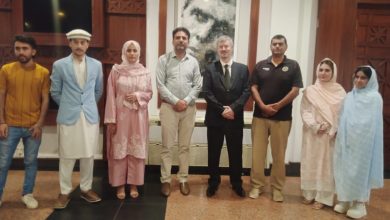
Civil servants, lawyers, business leaders and education experts from southern Khyber Pakhtunkhwa attended the course, which concluded with the distribution of certificates by the governor. Project Director Ayesha Rasool briefed the governor on the programme while Director General Captain (R) Usman Gul was also present. As a symbolic gesture, the governor planted a sapling on the institute lawn during the event.
Reflecting on local dispute resolution traditions, the governor noted that the jirga system has long resolved conflicts through mutual respect and collective wisdom, and that mediation training on modern foundations strengthens this practice with constitutional safeguards. He emphasised the principles of neutrality and confidentiality as central to adapting traditional mechanisms to contemporary legal standards.
The governor argued that arbitration and mediation should be treated as complementary to customary systems rather than replacements, aligning centuries-old practices with modern law. Citing global trends, he noted that disputes resolved through mediation often conclude far more quickly than court litigation and urged Pakistan to promote the same model to improve access to justice.
On legislative reform, Governor Kundi welcomed proposed amendments to the ADR Act that include making pre-trial mediation mandatory in certain cases, calling the measure far-sighted because it allows parties to settle disputes by mutual consent before lengthy court proceedings. He said such steps would be particularly valuable during the historic transition in the newly merged districts, where mediation can act as a stabilising bridge for the constitutional system while preserving social cohesion.
The governor’s remarks focused on practical outcomes: by scaling mediation training and institutional support, southern districts and newly merged areas can expect quicker dispute resolution, reduced court backlog and a more secure environment for investment and community stability.