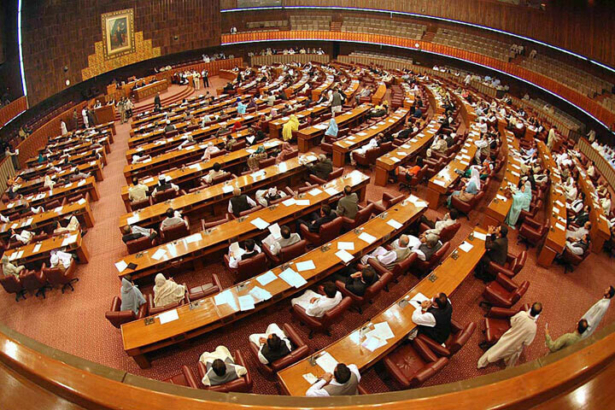
During the second parliamentary year from March 1, 2025 to February 28, 2026 the National Assembly accelerated its legislative agenda, recording 59 bills passed compared with 47 in the first year. The chamber met for 84 sittings—down from 93—yet total working hours rose to 231 hours, reflecting longer sittings despite fewer sitting days.
Budget allocations for the legislature stood at PKR 16,290 million for the year. That translated into an average cost of about PKR 193.93 million per sitting, up from PKR 136.96 million in the first year, underlining higher per-session expenditure as activity intensified.
Legislative productivity contrasted with reduced executive-driven instruments: reliance on ordinances dropped to 8 from 16 in the previous year. The Assembly’s output also outpaced recent precedents, surpassing the average of 21.75 bills passed in the second years of the 12th to 15th National Assemblies.
Several high-impact measures were processed rapidly. The passage of the 27th Constitutional Amendment introduced changes affecting judicial appointments and institutional balance, and the Elections (Amendment) Bill, 2026 granted authorities discretion to withhold legislators’ asset declarations on security grounds. The speed of processing major laws prompted concerns about limited committee scrutiny and constrained clause-by-clause deliberation.
Parliamentary agenda management showed persistent weaknesses: nearly half of scheduled items remained unfinished, with 47.59% of the daily agenda carried over, only a marginal improvement from 49.18% in the first year. Member engagement also trended downward as average MNA attendance fell to 58.80%, from 66.29% previously. Quorum was called 19 times and 8 sittings were adjourned for lack of quorum. Prime Minister Mian Muhammad Shehbaz Sharif attended just 6 of 84 sittings, roughly 7% of meetings.
The legislative year was further affected by a prolonged vacancy in the office of the Leader of the Opposition after the disqualification of Omar Ayub Khan on August 5, 2025. The post remained unfilled until January 16, 2026, creating an institutional vacuum that narrowed formal avenues for government–opposition engagement at a time when consensus building was needed to accompany accelerated lawmaking.
The National Assembly’s second-year record therefore presents a mixed picture: a notable uptick in lawmaking activity and reduced reliance on ordinances, counterbalanced by attendance shortfalls, agenda backlogs and limited committee-level scrutiny that together raise questions about the quality of parliamentary oversight.