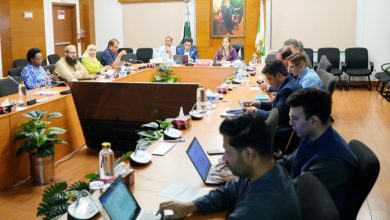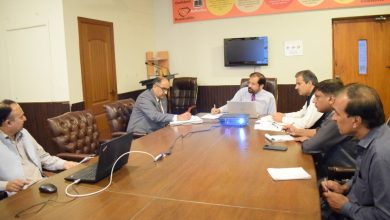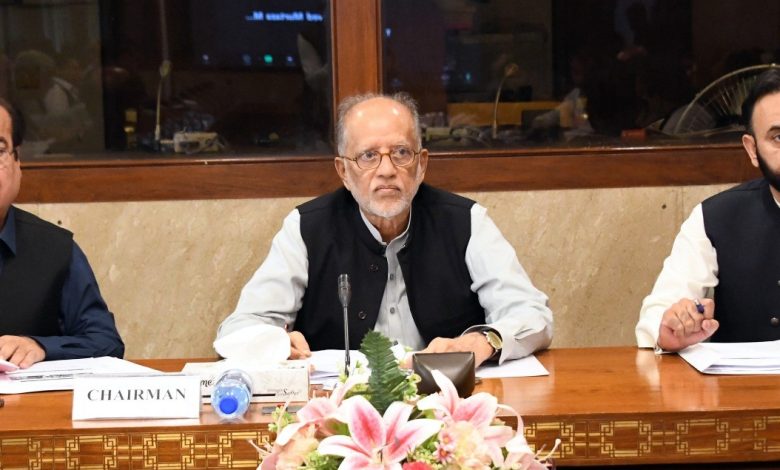
The National Assembly’s Standing Committee on Industries and Production strongly condemned the government’s reported plan to close Utility Stores across the country, expressing concern over potential mass unemployment. They further highlighted the urgent need for a national four-wheeler automobile certification policy to enhance vehicle safety, and criticized K-Electric for charging significantly higher electricity tariffs in Karachi compared to the rest of Pakistan.
The Committee, led by Chairman Syed Hafeezuddin, expressed serious apprehensions about the government’s announcement to shut down Utility Stores nationwide at the end of July. Committee members recalled assurances given previously by the Federal Minister for Industries and Production, who had stated publicly that only Utility Stores incurring continuous losses would be closed. The committee emphasized that closing the entire Utility Stores Corporation would immediately jeopardize approximately 16,000 jobs. Members agreed unanimously to pursue this matter through appropriate forums, insisting that privatization or closure should be revisited in view of its far-reaching socio-economic consequences.
The committee also voiced significant concern over the ongoing absence of a standardized automobile certification framework for four-wheeler vehicles in Pakistan. Members pointed to the lack of rigorous monitoring mechanisms for manufacturing industries, underscoring this absence as a contributing factor toward an alarming number of road accidents and fatalities. In view of these concerns, the Committee directed the Ministry of Industries and Production to urgently consult relevant stakeholders and draft proposals aligned with international best practices to minimize future risks. The Ministry was instructed to present its policy recommendations and implementation strategy in the next committee meeting.
In addition, the Committee sharply criticized K-Electric over the unequal electricity tariff rates being implemented within its jurisdiction. Members pointed out the stark disparity—consumers in Karachi paying Rs. 40 per unit, while elsewhere across the country, the tariff was capped at Rs. 28 per unit. Calling this discrepancy discriminatory and unjustifiable, Committee members directed K-Electric to immediately review and reduce its rates to harmonize electricity tariffs across all regions, thus alleviating the financial stress on consumers in Karachi.
Earlier in the meeting, the Additional Secretary from the Ministry of Industries and Production, along with representatives from various departments, briefed the committee members on their ongoing efforts to improve departmental performance and discussed various obstacles they faced in achieving higher efficiency.
The meeting was attended by MNAs Mr. Shahid Usman, Mr. Sajid Mehdi, Ms. Kiran Imran Dar, Syed Murtaza Mehmud, Dr. Mahesh Kumar Malani, Mr. Abdul Hakeem Baloch, Dr. Mahreen Razzaq Bhutto, Ms. Naz Baloch, Mr. Muhammad Iqbal Khan, Mr. Muhammad Mobeen Arif, Mr. Muhammad Saad Ullah, Rana Atif, Mr. Muhammad Arshad Sahi, and Syed Raza Ali Gillani. Also present were senior government officials including the Additional Secretary of the Ministry of Industries and Production, senior representatives from the Federal Board of Revenue (FBR), Managing Director of the Utility Stores Corporation (USC), and senior representatives from K-Electric.