By Tahir Amin
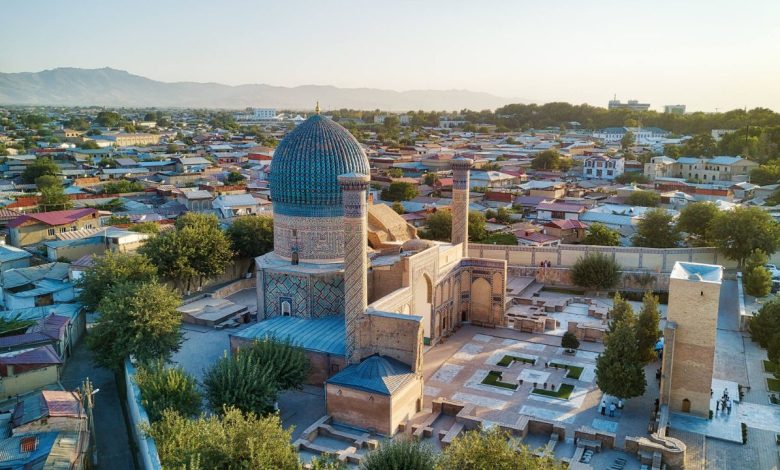
There are some cities that impress visitors with skyscrapers, and there are others that leave a lasting impact through discipline, culture, cleanliness, and collective national pride. Samarkand belongs firmly to the latter category.
During the 59th Annual Meeting of the Asian Development Bank in Uzbekistan, I had the opportunity to witness not just the official proceedings, but also the deeper social and civic culture that makes Samarkand one of Central Asia’s most admired destinations.
Covering the Bank’s annual meeting in Samarkand did not require writing about the city or even about Uzbekistan itself. The assignment was purely professional and focused on economic discussions, policy debates, and development financing. However, the overall environment — civic discipline, public behavior, cleanliness, hospitality, and administrative efficiency witnessed during the visit — compelled me to write something beyond official meetings. Sometimes a city itself becomes the story, and Samarkand undoubtedly proved to be one of those rare places that leave visitors reflecting not only on what exists there, but also on what is missing back home.
What I experienced there was not merely hospitality; it was a functioning national mindset that many developing countries, including Pakistan, can learn from.
From the moment delegates arrived, an impressive system of volunteers was visible across every venue, corridor, road, and event facility. Young university students stood tirelessly for hours, guiding delegates, helping with transportation, solving logistical issues, and facilitating guests with extraordinary professionalism. What stood out most was their attitude. Even when offered tips or gifts, they politely refused, asking only for good wishes and appreciation for their country.
That single gesture reflected something larger: a strong sense of ownership and patriotism.
In many countries, volunteerism is often symbolic or temporary. In Samarkand, it appeared institutionalised and deeply rooted in social values. These young students were not simply assisting delegates; they were acting as ambassadors of Uzbekistan’s image before the world.
Another striking feature was the cleanliness.
Whether one visited the city centre, historical landmarks, streets, markets, or public spaces, there was visible order and maintenance everywhere. Local residents explained that cleanliness responsibilities are taken seriously and that citizens are expected to maintain their surroundings regularly. According to locals, Monday cleaning routines are observed rigorously, and negligence can invite official displeasure.
What made this remarkable was not merely government enforcement, but public compliance.
The vegetable and fruit bazaars were perhaps the biggest surprise. In South Asia, such markets are often associated with overflowing waste, stagnant water, unpleasant smells, clogged drains, and unmanaged crowds. In Samarkand, the opposite was true. The markets were exceptionally clean, drainage systems functioned properly, there was no foul smell, and waste disposal appeared organised and disciplined.
The experience highlighted a basic but powerful truth: cleanliness is not a luxury of rich nations; it is a product of governance, civic sense, and enforcement.
Beyond civic discipline, Uzbekistan has also mastered the art of preserving history while turning it into economic opportunity.
The grandeur of Registan, the spiritual beauty of Shah-i-Zinda, the magnificence of Bibi-Khanym Mosque, and the historical legacy associated with Amir Timur continue to attract thousands of tourists from across the globe. Likewise, the Imam al-Bukhari Complex and the Center of Islamic Civilization in Tashkent demonstrate how Islamic heritage can be preserved with dignity while simultaneously supporting tourism and economic growth.
Tourism there is not treated as a side industry; it is integrated into national planning, urban management, and international branding.
The economic impact is visible. Hotels remain occupied, restaurants thrive, transport systems stay active, and local businesses benefit from a constant flow of visitors. Tourism generates millions of dollars in revenue while simultaneously strengthening the country’s global image.
Equally memorable were the people themselves.
Everywhere, one encountered calmness, patience, courtesy, and cooperation. There was an absence of unnecessary aggression and chaos that has unfortunately become normal in many urban centres across the developing world. The hospitality extended by ordinary citizens left a deep impression.
A dinner hosted at Muhammad Jan’s residence became another memorable example of Uzbek warmth and generosity. The liaison officers and facilitators, particularly Sardor Azamov, remained available at every point to guide and assist delegates without hesitation. Their professionalism reflected preparation, training, and above all, sincerity.
Perhaps the biggest lesson from Samarkand is that national image is not built through slogans alone.
It is built through systems.
It is built when students voluntarily protect their country’s reputation. It is built when streets remain clean because citizens and authorities both care. It is built when historical sites are preserved instead of neglected. It is built when tourists feel safe, welcomed, and respected.
Pakistan possesses extraordinary tourism potential — from the mountains of Gilgit-Baltistan to the ancient civilizations of Mohenjo-daro and Taxila, from Mughal heritage in Lahore to the coastal beauty of Gwadar. Yet potential alone never attracts tourists. Infrastructure, cleanliness, security, facilitation, urban management, and public behaviour matter equally.
Samarkand offers an important model: preserve heritage, enforce civic discipline, involve youth, maintain public spaces, and create a culture where every citizen sees themselves as a representative of the nation.
Countries do not become attractive destinations accidentally. They become attractive when governance and society move together.
For Pakistan, the lesson from Samarkand is both simple and profound: tourism is not only about monuments — it is about mindset.