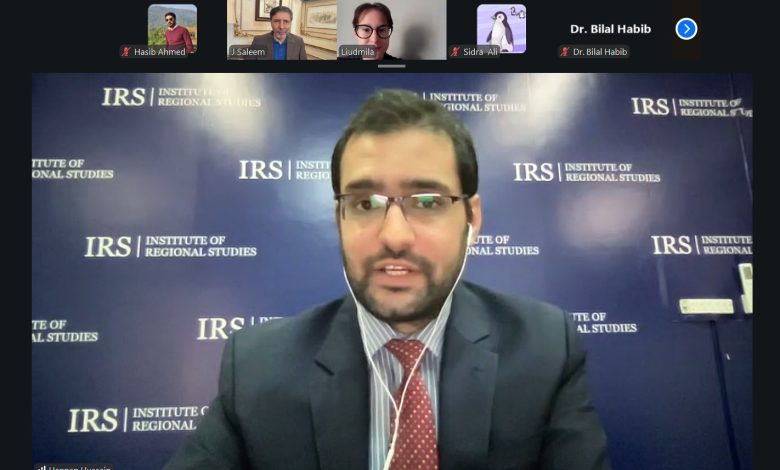
The Institute of Regional Studies in Islamabad convened an expert webinar that brought together scholars and observers to assess evolving US Iran relations and their implications for regional and global stability. Dr. Lyudmila Aleksandrovna Pechishcheva, Senior Research Fellow at the Institute of China and Contemporary Asia of the Russian Academy of Sciences, delivered the keynote analysis.
In opening remarks, Ambassador Jauhar Saleem, President of the Institute of Regional Studies, warned that the US Iran relationship carries consequences far beyond immediate security concerns. He highlighted threats to global energy supplies, gas flows and fertilizer production that could cascade into international food security risks and inflationary shocks, stressing that sustained diplomatic engagement and a structured negotiation framework are urgently needed.
Speakers underscored practical steps toward de-escalation, including the unblocking of critical maritime routes such as the Strait of Hormuz and the resumption of shipping flows. Ambassador Saleem noted that issues like phased sanctions relief, regional security guarantees and partial unfreezing of assets require coordinated international diplomacy, and he pointed to Pakistan’s potential role as a facilitator of constructive dialogue in the region.
Dr. Pechishcheva outlined several possible trajectories for US Iran relations, ranging from a comprehensive grand bargain that would impose structured nuclear limitations and enable Iran’s reintegration into the global economy, to a fragile no-war no-peace equilibrium marked by partial agreements and persistent tension. She also examined a pessimistic scenario in which escalation is driven by geopolitical rivalry, economic sanctions and internal instability, warning that each path carries distinct risks and policy levers.
The strategic importance of the Strait of Hormuz was a recurring theme, with participants noting how any disruption to this corridor could sharply affect oil prices and maritime trade security. Emerging diplomatic frameworks discussed at the webinar include phased sanctions relief tied to verification mechanisms, renewed negotiations on enrichment limits, and reciprocal security assurances from key international actors.
Panelists reflected on wider shifts in the global balance of power and debates around multipolarity, emphasizing that the roles of major external actors will shape outcomes across the Middle East. There was broad agreement that preventing escalation and securing long term peace will depend on sustained diplomacy, calibrated restraint and multilateral engagement, with Pakistan positioned to support dialogue and stability in this delicate process.