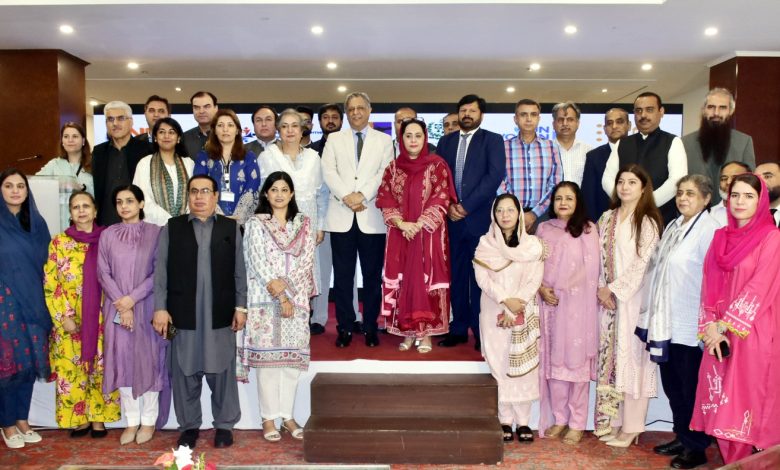
The government reaffirmed its commitment to adopt a National Gender Parity Framework that will standardize reporting, improve data quality and strengthen policymaking to close gaps in women’s education, health, employment and leadership. A two-day national consultation hosted by the National Commission on the Status of Women brought provinces and regions together to present indicators and reports and reached consensus on a uniform mechanism for gender parity reporting.
The National Commission on the Status of Women, known as NCSW, convened the consultation to review regional and provincial submissions on gender parity indicators. Delegates from all provinces and regions presented their reports and metrics, and participants agreed on a common reporting framework to ensure consistent monitoring across the country.
Senator Azam Nazir Tarrar stressed that the new framework must deliver reliable and accurate data to inform policy. He said the initiative will enable stronger, evidence-based policymaking to address deficiencies in women’s access to education, health services, employment opportunities and leadership positions. “Equality should not be a promise but a practical reality,” he said.
A federal minister noted concerns that some international statistics misrepresent Pakistan’s situation. The minister argued that a national framework with standardized, locally produced data will provide a clearer and more accurate picture of gender parity progress.
The Ministry of Human Rights pledged to integrate the new framework into existing laws and policies to ensure its recommendations are translated into practice. Officials emphasized that legal and policy alignment is essential for sustained progress on women’s rights and inclusive development.
Participants highlighted the Prime Minister’s commitment to promoting women’s rights and equal inclusion as a guiding principle for the framework’s implementation. With a unified reporting mechanism and stronger data, authorities say they will be better positioned to design and evaluate programs that close gender gaps across sectors.