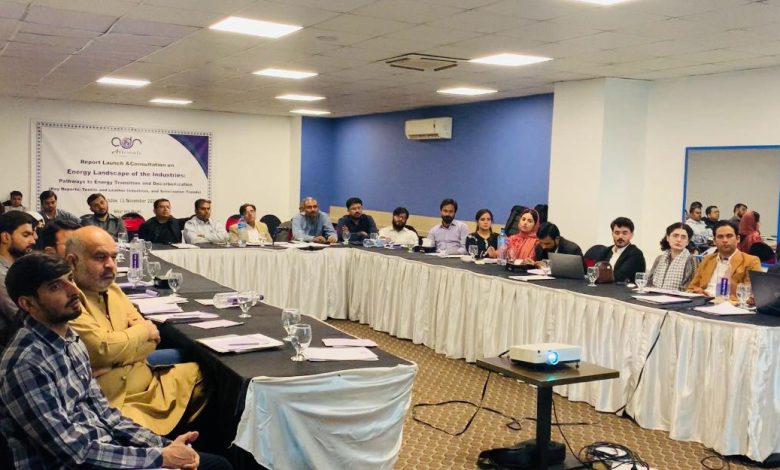
Climate and energy experts warned in Faisalabad that Pakistan’s industrial sector must accelerate industrial decarbonization and shift toward renewable energy to stay competitive in global markets increasingly governed by climate regulations. The warning came at the launch of three research studies hosted by Alternate Development Services, where academics, industry representatives, civil society and policymakers examined the energy future of the textile and leather industries.
ADS Chief Executive Amjad Nazeer said industries were at a decisive moment where energy choices will determine export prospects and survival in international value chains. He cautioned that new global carbon thresholds and shifting buyer expectations are already reshaping industrial production and that countries acting early will secure economic advantage while those delaying risk exclusion.
The first study, presented by Dr Syed Ali Abbas Kazmi and Muhamad Usman bin Ahmed from NUST, assessed the techno-economic feasibility of off-grid solar systems for the textile sector. Their analysis showed significant cost savings and material carbon reductions under the Competitive Trading Bilateral Contract Market regime, a change expected to redefine Pakistan’s power market and to make industrial decarbonization an economically viable pathway for textile exporters.
Abdul Haseeb Tariq of ADS documented the current pattern of solar adoption across industrial clusters and found that while solarisation is expanding, regulatory gaps, financial barriers and inconsistent government support are limiting large-scale transition. The study underlines the need for clear policies and financing models to accelerate renewable uptake in factories and industrial estates.
Amjad Mehdi of ADS analysed the leather industry and identified major inefficiencies, emissions hotspots and targeted opportunities for low-carbon interventions. With international buyers increasingly scrutinising supply chains, the report warned that failure to decarbonise could directly affect market access and the sector’s export performance.
A panel including experts from the University of Agriculture Faisalabad, National Textile University, NUST and the private sector highlighted that renewable energy adoption is now driven less by environmental preference and more by buyer requirements, particularly from European markets. Panelists agreed that sustainability compliance is non-negotiable for global procurement and that industries focused on return on investment will accelerate change once buyers tie orders to clean energy practices.
Speakers also noted a growing trend where solar energy is used to meet Environmental, Health and Safety criteria set by international brands. They urged diversification of energy sources, early investment in efficiency and renewable technologies, and closer collaboration between government, academia and industry. The three studies were described as practical blueprints for action to guide Pakistan’s industrial decarbonization and long-term energy planning, stressing that decisive planning is essential to avoid falling behind in a low-carbon global economy.