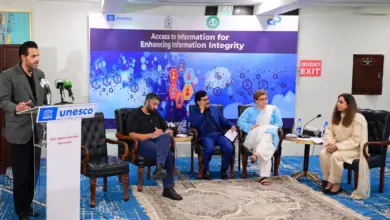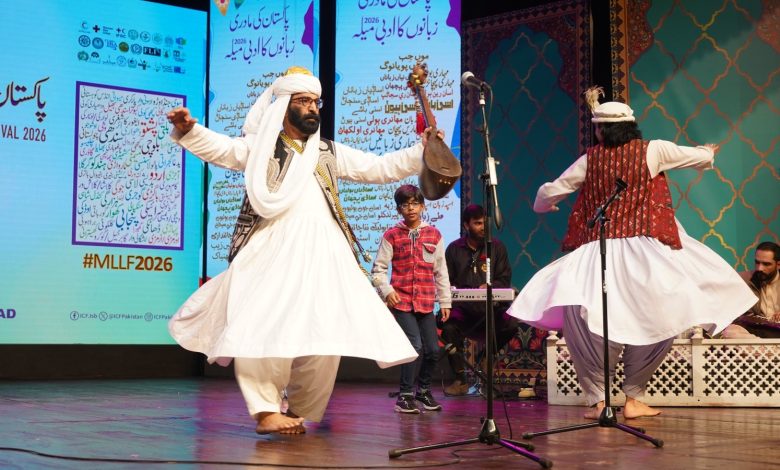
The Pakistan Mother Languages Literature Festival 2026 at the Pakistan National Council of the Arts brought together writers, scholars, policymakers and artists to press for concrete policy change that strengthens Mother Languages across the country. Organized by Indus Cultural Forum in collaboration with PNCA, the three-day event celebrated linguistic diversity in its 11th year while centering action-oriented solutions for education and governance.
On the final day speakers stressed translating dialogue into tangible steps, arguing that state policy must prioritize harmony over uniformity through recognition of linguistic diversity. Delegates called repeatedly for the establishment of a national language commission to assess the status of all languages and to guide inclusive legislation and educational frameworks.
Discussions on the use of Mother Languages for public awareness highlighted practical initiatives in legal literacy, agricultural extension and civic communication carried out in regional tongues such as Sindhi, Pashto and Balochi. Panelists noted that public services become more effective and accessible when information is delivered in the native language of communities.
Experts in a session on language policy and politics examined constitutional provisions and school curricula, urging policymakers to treat multilingualism as a national asset rather than a challenge. The session emphasized policy reforms that would integrate Mother Languages into formal education and research agendas.
Scholars presented new work on linguistic research and the revitalization of endangered languages, with studies covering Sindhi sociolinguistics, Khowar oral traditions, Gawarbati documentation, Kohistani rhetoric, Pahari and Pothohari literature, Seraiki literary history and Brahui scholarship. Presenters underscored documentation, translation and digital archiving as immediate priorities for language survival.
A session linking folk literature to climate change demonstrated how indigenous storytelling and music can convey environmental knowledge and mobilize community responses. Speakers argued that traditional knowledge systems remain vital for contemporary climate resilience efforts.
Another discussion focused on women as creators and curators of oral culture, detailing how mothers and female community members sustain folk wisdom and intergenerational memory. The panel highlighted women’s central role in preserving and transmitting language and literature from early childhood onward.
Models of mother-tongue based education showcased community-driven and institutional efforts that improve comprehension and strengthen identity. The Ahmed Saleem Study Circle paid tribute to literary figures such as Shaikh Ayaz, Fahmida Riaz, Mubarak Kazi and Syed Zahoor Hashmi, recognizing their contributions to Pakistan’s multilingual literary heritage.
Prominent voices at the festival included Member of the Khyber Pakhtunkhwa Assembly Nisar Baaz Khan, former federal minister and writer Madad Ali Sindhi, scholar Dr. Khadim Hussain and university vice chancellors Dr. Raza Bhatti, Dr. Madad Ali Shah, Maleeha Sattar and Dr. Ishaq Samejo. Representatives from the Sindhi Language Authority and Pakistan Academy of Letters, including Dr. Sher Mehrani and Dr. Bibi Ameena, detailed institutional efforts to support publication, research and promotion of regional languages. Indus Cultural Forum chairman Naseer Memon urged that language survival depends not only on government action but on community ownership and responsibility.
The festival closed with a musical evening celebrating Pakistan’s linguistic traditions and reaffirmed commitments from partners such as the Higher Education Commission, UNESCO, Sindh Culture Department, Pakistan Science Foundation and numerous universities and cultural organisations to support multilingual education, research and archiving. Participants left with a clear call for policy measures, institutional collaboration and sustained community engagement to advance Mother Languages across Pakistan.