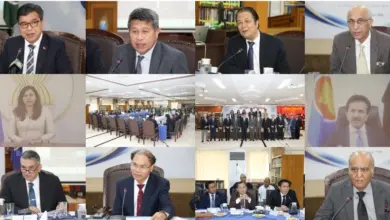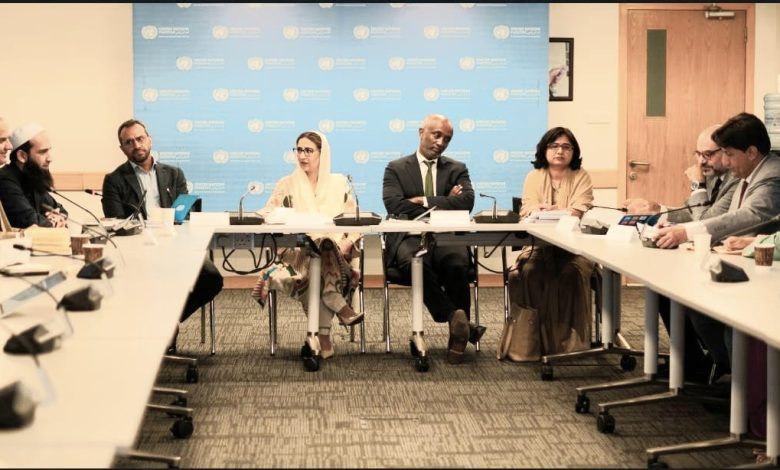
Islamabad, 10 May 2026 — A policy dialogue convened by the Sustainable Development Policy Institute and UNESCAP stressed that a successful energy transition in Pakistan depends on policy coherence, domestic resource mobilisation and targeted social protection to shield vulnerable communities.
The event, held to discuss Socioeconomic Prosperity amid the Transition to an Environmentally Sustainable Economy and to showcase the Economic and Social Survey of Asia and the Pacific 2026, brought together policymakers, development partners and economic advisers to map a realistic pathway for the energy transition that aligns with national development goals.
In her keynote address, Minister of State for Climate Change Dr Shezra Mansab Ali Khan Kharal underlined that the energy transition must advance socioeconomic development by supporting productivity, stabilising prices and promoting inclusive growth. She called for mobilising private investment, international climate finance and innovative funding mechanisms given limited fiscal space, and urged pragmatic prioritisation to ensure a “just, financeable, and realistic” transition.
Dr Sajid Amin Javed of SDPI argued that integrating the global shift to green energy into Pakistan’s economic governance is essential to avoid unintended trade-offs. He emphasised policy coherence across social, economic and energy sectors and warned that without protection measures the poorest households could face disproportionate costs during the transition.
UNESCAP Director Dr Hamza Ali Malik presented a three-step framework linking clear transition goals such as reducing fossil fuel dependence and expanding renewable energy to measures that confront political economy obstacles and sustain reform momentum. He recommended using targeted, temporary and transparent fiscal support to protect living standards while anchoring inflation expectations and preserving health, education and social protection as central priorities.
Speakers repeatedly flagged recent floods and political shifts that have altered Pakistan’s socioeconomic landscape. UNDP Resident Representative Dr Samuel Rizk emphasised the need to operationalise frameworks such as URAAN Pakistan and the Nationally Determined Contributions while strengthening implementation and financing strategies. He cautioned against over-reliance on external aid and urged greater domestic resource mobilisation to fund climate and development investments tied to the energy transition.
From the Prime Minister’s Office, Dr Shazia Ghani noted structural constraints including limited fiscal space, technological gaps and barriers to accessing climate finance instruments. She advocated realistic, phased targets that match Pakistan’s capacity and highlighted market-driven progress in solar adoption as a model for scaling up clean energy while focusing on implementation rather than solely monetary policy adjustments.
Raja Mohsin Hasan of the Ministry of Finance welcomed the report’s policy recommendations as grounded in on-the-ground realities and pointed to growth opportunities around electric vehicle investment and renewable projects. In closing, UN Resident and Humanitarian Coordinator Mohamed Yahya framed energy security as a national security priority, arguing that energy independence and resilience are prerequisites for sustainable economic development and calling for strategic prioritisation and incentives to accelerate the transition.
Participants agreed that an effective energy transition for Pakistan must combine clear national goals, coordinated federal-provincial action, management of distributional impacts and stronger regional cooperation. Emphasis on domestic financing, private sector engagement and protective social measures was presented as essential to make the energy transition both equitable and financeable for Pakistan’s development trajectory.