Lawmakers Grill IHRA Over Conflict of Interest and Regulatory Lapses
Hospital Watchdog IHRA Faces Calls for Transparency and Accountability

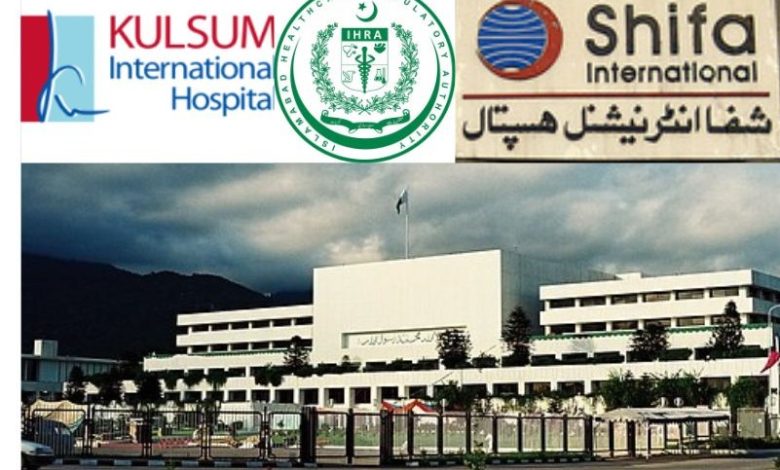
Islamabad: (Nadeem Tanoli) The Islamabad Healthcare Regulatory Authority (IHRA) has come under fierce criticism from a parliamentary sub-committee for allegedly shielding private hospital interests, harboring conflict of interest at the board level, and failing to perform its basic regulatory functions. Lawmakers slammed IHRA for operating as a toothless body that has allowed unchecked profiteering by powerful hospital owners—some of whom sit on the very board meant to regulate them.
In a scathing session chaired by Dr. Amjad Ali Khan, committee members expressed outrage over IHRA’s inability to establish even a basic processing system to monitor hospital operations. The convenor noted that if the regulator cannot perform its core function, then “what is the purpose of IHRA’s existence?” The committee demanded a complete list of IHRA board members, specifically those who also own private hospitals—calling it a blatant conflict of interest.
Dr. Shazia Sobia criticized the regulatory vacuum that IHRA has allowed to persist and insisted that the authority is legally obligated to provide all information about hospitals operating in Islamabad, including staff credentials, dental section registrations, and ownership structures. The committee also questioned why IHRA had fired 16 employees and demanded an explanation along with documentation of their qualifications.
Further intensifying the pressure, the committee cited the case of a patient who was charged Rs 7 million by Shifa International Hospital—questioning IHRA’s silence on such exorbitant medical bills and calling into doubt its commitment to patient rights and affordability.
Defending itself, IHRA’s CEO claimed that board appointments are made by the federal cabinet. However, lawmakers rejected this as an excuse, arguing that regardless of appointment origin, IHRA must act independently and transparently. The Additional Secretary from the Ministry of Health assured the committee that all concerns would be conveyed to the Health Minister and a complete report submitted in the next meeting.
Meanwhile, the Federal Board of Revenue (FBR) revealed that private hospitals paid Rs 1.464 billion in taxes in 2025, up from Rs 350 million in 2020, in addition to Rs 7.4 billion in withholding taxes. However, FBR refused to provide hospital-wise tax data, citing confidentiality—prompting committee outrage and a warning that parliamentary committees have the legal authority to access all relevant records.
The committee also flagged issues with so-called trust hospitals, questioning the tax-exempt status of “Shifa Trust” while noting that “Shifa International Hospitals, Kulsum International Hospital Ali Medical Hospital Trust” is not even formally registered. A list of all such hospitals was requested for the next meeting.
A formal notice had earlier summoned representatives from FBR, IHRA, CDA, and the Ministry of Health to present all regulatory and tax documents—none of which, the committee implied, adequately addressed the deep-rooted governance crisis in the health sector.