Pakistan Launches One Health Initiative with WHO, FAO, and ADB to Strengthen Pandemic Preparedness
Pakistan Begins Implementation of $18.7M Pandemic Fund with Global Health Partners

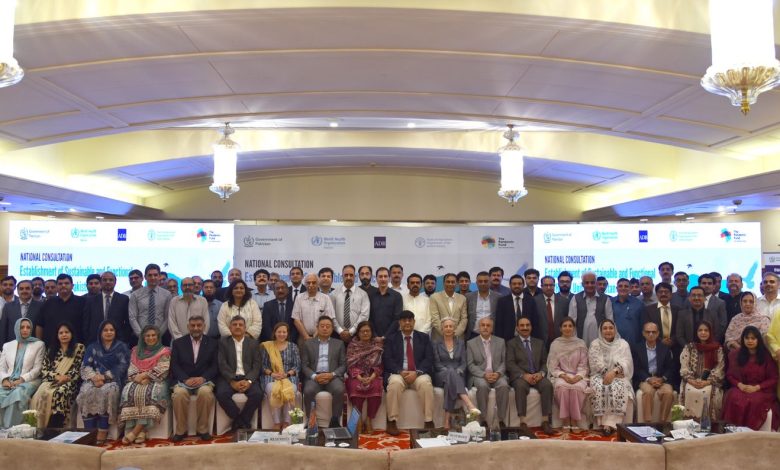
ISLAMABAD — Pakistan has officially launched the implementation of its Pandemic Fund with support from the World Health Organization (WHO), Food and Agriculture Organization (FAO), and the Asian Development Bank (ADB) through a national high-level consultation in Islamabad on June 27, 2025. The initiative focuses on establishing One Health Units across the country as a key step toward preventing, preparing for, and responding to future pandemics by integrating human, animal, and environmental health systems.
The national consultation, led by the Ministry of National Health Services, Regulations and Coordination, marked the first formal activity under Pakistan’s US$18.7 million Pandemic Fund grant. It brought together over 70 stakeholders, including senior officials from the Ministry of Food Security, Ministry of Climate Change, provincial authorities, and implementing partners. The National Institute of Health (NIH) will serve as the Secretariat for the One Health structure.
Speaking at the event, Director General Health Dr. Shabana Saleem emphasized that the initiative represents a turning point for Pakistan’s public health readiness. “The interdependence of human, animal, and environmental health, compounded by rising antimicrobial resistance (AMR), demands a One Health framework. This fund enables us to strengthen surveillance, build lab networks, and empower communities,” she said.
Pakistan’s One Health strategy, aligned with the National Action Plan for Health Security (NAPHS) and International Health Regulations (IHR), acknowledges that more than 75% of emerging infectious diseases are zoonotic. This highlights the urgency of coordinated early warning systems, workforce training, and cross-sectoral data sharing.
Florence Rolle, FAO Representative in Pakistan, commended the government’s commitment to addressing zoonotic risks and AMR, noting the importance of embedding One Health platforms within existing institutional structures. WHO Representative Dr. Dapeng Luo reiterated the organization’s commitment to ensuring Pakistan is ready to prevent and respond to health emergencies, stating, “Strengthening systems now is the only path forward.”
Representing ADB, Mansoor Ali Masood called the consultation a critical milestone in institutionalizing collaborative platforms for joint action. The meeting concluded with a joint agreement to establish a National One Health Secretariat, with strong linkages to provincial structures.
CEO NIH, Dr. Muhammad Salman, reaffirmed NIH’s commitment to supporting the implementing entities. “It is an honor to host the Secretariat. We must use this opportunity to strengthen surveillance, laboratory systems, and public health capacity across sectors,” he stated.
In total, the project has leveraged an additional US$4.1 million in co-financing and US$49.7 million in co-investment, setting the foundation for a sustainable, multisectoral public health ecosystem in Pakistan.