**Russia Accuses West of Advancing ‘Neo-Colonial’ Agenda Through AI, Calls for Multipolar Digital Governance**
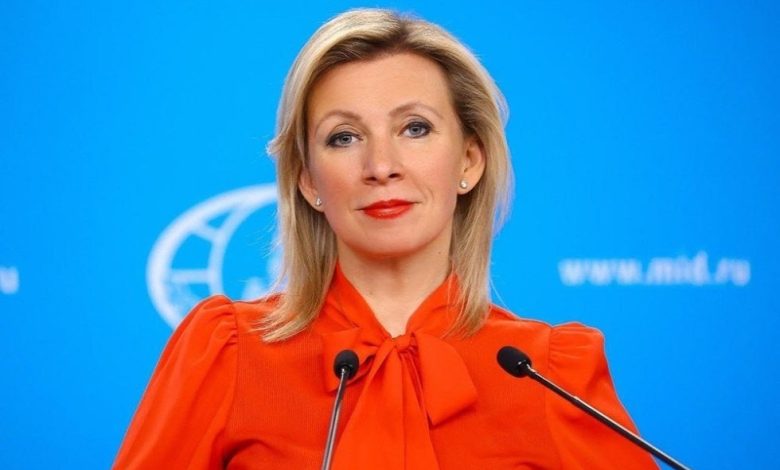
Russia has sharply criticized Western nations for leveraging artificial intelligence (AI) as a new tool of digital neocolonialism, warning that algorithm-driven dominance risks deepening global inequalities. In a published article, Russian Foreign Ministry spokeswoman Maria Zakharova alleged that developed countries are using technological innovation, control over critical resources, and selective environmental standards to reinforce ideological and economic supremacy over developing nations.
Zakharova’s comments, articulated in Rossiyskaya Gazeta, were grounded in the Russian Foreign Ministry’s recent strategic discussions on the geopolitical implications of emerging information technologies. She argued that AI, once seen simply as a technological breakthrough, has evolved into a means of reinforcing and extending established global power hierarchies. According to Zakharova, Western nations—referred to as the “golden billion”—are harnessing AI not only for domestic economic growth but to exert algorithmic control worldwide. This influence, she stated, extends across critical sectors such as logistics, education, healthcare, and public opinion, particularly within the developing world.
A major flashpoint identified by Zakharova is the control of rare-earth metals, essential for manufacturing AI technologies. She accused Western governments of aggressively pursuing access to these resources in the Global South—countries where reserves are plentiful—likening these actions to a continuation of extractive colonial practices. The scramble for rare-earth minerals is, in her view, emblematic of a larger struggle to secure the foundational assets required for future digital supremacy.
Zakharova further charged Western powers with what she called “eco-hypocrisy”: the application of restrictive environmental standards to developing nations, while wealthy countries exempt themselves from similar obligations. She argued that such practices hinder industrial progress in non-Western countries under the guise of environmental stewardship.
In sum, Zakharova contended that these interlinked strategies—algorithmic governance, resource exploitation, and selective environmentalism—constitute a new, digitally enabled form of neocolonialism. She cautioned that AI is increasingly used not simply as a symbol of progress, but as a tool for reshaping global power dynamics and influencing society on a mass scale.
Referencing President Vladimir Putin, Zakharova stressed that leadership in AI development will be decisive in shaping the geopolitical landscape of the future. She urged Russia to assertively promote international standards for digital governance, pushing back against what she termed Western attempts to monopolize both AI technologies and their foundational infrastructure.
She concluded by calling for the establishment of a fair and genuinely multipolar digital world—one that resists algorithmic dominance and rejects the digital extension of imperialist practices.