Experts have emphasized that the widespread adoption of electric vehicles (EVs) in Pakistan hinges on integrated policies, local manufacturing, and robust infrastructure. While the government has implemented several incentives to encourage EV use, significant challenges remain, including limited consumer purchasing power, inadequate charging and repair facilities, and concerns about the readiness of the national power grid.
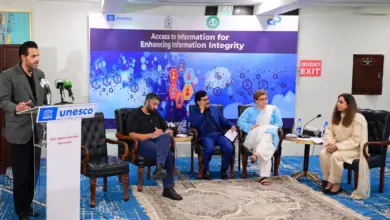
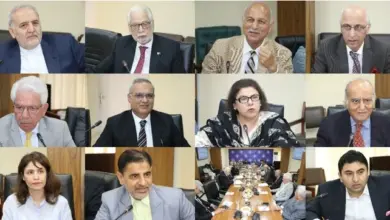
These insights were shared during a roundtable discussion on the future of low-carbon transport in Pakistan, organized by the Institute of Policy Studies in Islamabad. Policymakers, industry experts, and researchers gathered to assess the opportunities and hurdles in transitioning to electric mobility as part of broader climate and sustainability goals.
Asim Ayaz, General Manager Policy at the Engineering Development Board, noted that although Pakistan has been working on comprehensive EV policies since 2019, market uptake has been slow. The government has offered incentives such as sales tax exemptions and minimal import duties, and even introduced initiatives like schemes for distributing electric bikes. Still, the higher upfront cost of electric two-wheelers compared to conventional motorcycles, lack of battery swapping, and a scarcity of charging stations continue to deter consumers.
Representing Punjab, Sulaiman Majeed highlighted that two-wheelers dominate the province’s roads, making up 89% of all registered vehicles. Replacing these with electrified mass transit is a provincial priority. Projects such as the Orange Line are already transporting hundreds of thousands daily, with further plans underway to expand electric bus fleets in major cities like Lahore, Multan, and Faisalabad as part of efforts to combat air pollution and smog.
In Balochistan, Dr Faisal Khan explained that the province’s unique geography makes large-scale transit projects difficult. Instead, pilot initiatives in Quetta are testing EV-based systems over small areas, relying on private investment for operation, while the government provides essential infrastructure such as parking and charging spaces.
The discussion also spotlighted critical technical and economic issues. Dr Usman Qadir argued that without investment in local manufacturing and research, EV growth will not be sustainable, and questioned whether widespread subsidies are viable in a country where private vehicle ownership is still rare. Concerns were raised by Dr Adil Khan and Mahrosh Fatima over potential grid instability caused by increased EV charging, with examples of voltage fluctuations already observed. Afzaal Khan and Asad Mehmood pointed to overlooked areas such as service facilities and the need to consider alternative technologies beyond electric vehicles, including hydrogen and advanced battery solutions.
Summing up the session, Khalid Rahman urged policymakers to design incentives that match the realities faced by most consumers and called for an integrated approach that tackles technical, financial, and operational barriers to EV adoption. The experts agreed that aligning policy, infrastructure, and consumer needs is essential if Pakistan is to successfully embrace cleaner and more sustainable transportation.