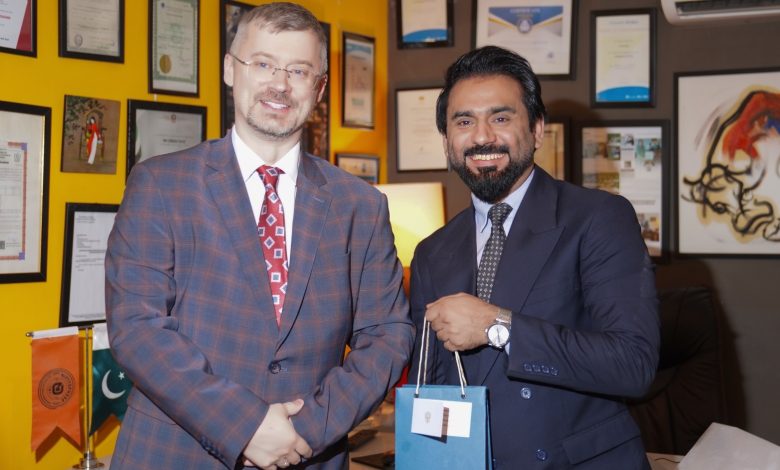
On April 24, 2026 in Islamabad, Ambassador of the Russian Federation Mr. Albert Khorev visited the Niftysphere Institute of Arts & Design as part of efforts to deepen Russia Pakistan ties. He was warmly received and given a guided tour by Syed Usman Tahir, Honorary Advisor to the Federal Minister of Culture, Mr. Aurangzeb Khan Khichi.
The delegation moved through various departments, observing academic programmes, creative workshops and skill-based training that serve emerging artists and designers. Both sides stressed the role of cultural diplomacy in building stronger links, noting that art and education provide practical pathways for student exchange, professional training and collaborative projects that can expand Russia Pakistan ties.
Ambassador Khorev praised the institute’s focus on nurturing talent and expressed interest in concrete collaborations, including participation by Russian institutions in upcoming cultural events and joint educational activities. Ms. Misbah Khar, Advisor to the Chairman of the Senate, also attended and commended Niftysphere for its contributions to arts education across Pakistan.
A special moment of the visit was a performance by sitar player, writer and musician Mr. Wajih Nizami, who played classical pieces that included a Russian melody alongside traditional tunes representing Pakistan’s provinces. The performance drew warm appreciation from the Ambassador and other guests, underscoring artistic unity and mutual respect.
The visit concluded with commitments on both sides to pursue cultural exchange programmes and student opportunities that strengthen institutional links. Niftysphere reiterated its readiness to engage with Russian partners in future events and initiatives that reinforce Russia Pakistan ties through art, education and skills development.