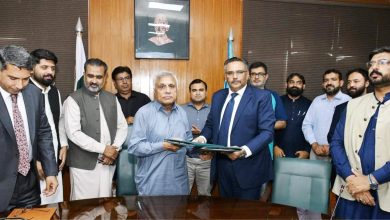
Federal Health Minister Syed Mustafa Kamal emphasized the importance of safely disposing hospital waste to effectively protect the public from disease outbreaks. Speaking at a ceremony organized by the Indus Hospital & Health Network, during which specialized yellow vans designed for infectious medical waste disposal were officially provided, the minister underscored that preventive measures are far more effective and beneficial for public health than curative interventions.
Highlighting the critical need for proper waste management practices, Minister Kamal stated, “Prevention is better than cure. If we do not take precautionary measures, diseases will overtake us.” He stressed that medical waste, when mishandled, poses grave hazards and quickly becomes a source of infections and diseases, making proper disposal an urgent public health priority.
Minister Kamal praised the efforts of the Indus Hospital & Health Network, which, with support from the Global Fund, has implemented specialized medical waste disposal vehicles in 15 districts throughout Pakistan, including the federal capital. He announced that one vehicle would specifically be handed over to Islamabad’s District Health Officer (DHO) to strengthen disease prevention measures in the capital city.
Citing statistics from health experts, the minister explained that preventive healthcare offers significantly better outcomes compared to treatment-oriented approaches. “Unfortunately, preventive measures have historically not been prioritized,” he added. According to Minister Kamal, around 68% of diseases in Pakistan stem from individuals consuming contaminated water, further highlighting the urgent need for systemic improvements in providing clean drinking water.
Addressing wider healthcare issues, Minister Kamal pointed out that rapid population growth complicates healthcare service delivery, placing enormous strain on existing healthcare facilities and leading to an increased patient load in hospitals. He emphasized the critical necessity of developing comprehensive strategies to control population growth, ensure access to clean drinking water, and promote safe handling and disposal of hazardous medical waste as integral components of national disease prevention programs.
Dr. Abdul Bari Khan, President of Indus Hospital & Health Network, echoed the minister’s views, indicating that progress in the healthcare sector cannot be measured merely by constructing new hospitals or obtaining modern medical equipment. “Rather, real advancement depends on establishing preventive health systems that safeguard communities,” Dr. Khan explained.
Dr. Khan noted that the introduction of these specialized waste disposal vehicles demonstrates the institution’s strong commitment to infection control practices, environmental protection, and sustainable healthcare. Expressing gratitude toward the federal government’s support, he expressed optimism that this initiative would serve as a model, inspiring similar preventive measures nationwide.