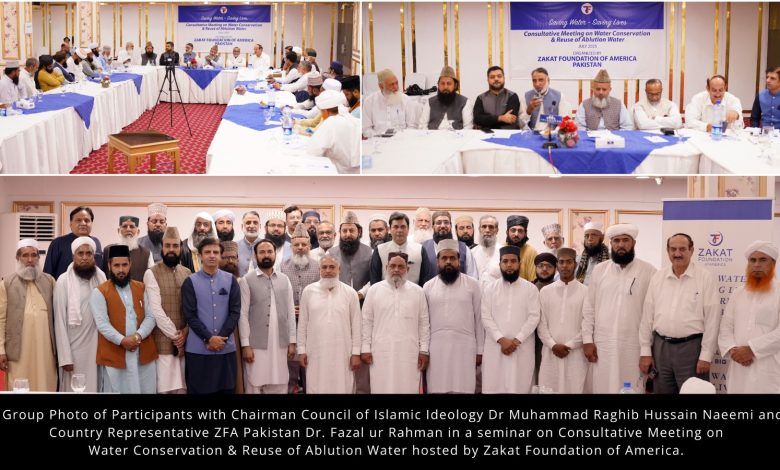
In an innovative effort merging Islamic teachings with environmental sustainability, the Zakat Foundation of America hosted a consultative meeting in Islamabad, bringing together religious scholars and environmental experts to explore methods for conserving and reusing ablution (Wudu) water in Pakistan’s mosques. The groundbreaking session aimed to address water conservation challenges by investigating practical solutions such as greywater recycling and rainwater harvesting systems, aligning sustainable practices with religious responsibilities.
The meeting engaged prominent Islamic scholars (Ulamah) from various mosques and madaris in Islamabad, alongside environmental experts and educators from reputable institutions. Notably, environmental activist Dr. Rehan Tahir, Dr. Adil Naseer of Bahria University and Dr. Irfan Khan, former Dean at the International Islamic University Islamabad, contributed their expertise during discussions. The session’s chief guest, Chairman of the Council of Islamic Ideology, Dr. Muhammad Raghib Hussain Naeemi, delivered the keynote address, highlighting the importance of combining religious guidance with ecological stewardship.
Speaking at the opening of the event, Dr. Fazal ur Rehman underscored the shared responsibility of preserving water as a divine resource. “Water is a divine blessing and a shared responsibility,” he noted, emphasizing, “Through practical steps and faith-based awareness, we can protect this vital resource for future generations.”
Attendees discussed several practical measures aimed at curbing water wastage during ablution in masajid, with particular emphasis on installing greywater recycling systems. These systems would capture and reuse Wudu water effectively for landscaping, sanitation, and various non-potable applications, thereby integrating environmental conservation seamlessly with religious ideals.
One of the significant outcomes announced in this consultative meeting was the launch of a pilot initiative targeted at mosques and institutions within Rawalpindi and Islamabad. The pilot project will introduce advanced rainwater harvesting techniques and reuse strategies for ablution water. If successful, experts envision expanding these measures nationwide as a model for water conservation and responsible resource management.
Mufti Zameer Sajid, respected member of the Ruet-e-Hilal Committee, strongly endorsed this initiative, reinforcing that the careful use of ablution water is not merely an environmental matter but a religious obligation. Under the campaign theme “Safe Water, Safe Life,” he remarked, “Conserving Wudu water is not just an environmental need—it is a religious responsibility. We must act with wisdom and foresight to preserve Allah’s blessings.”
Dr. Raghib Naeemi praised the Zakat Foundation of America for fostering dialogue between religious and environmental authorities, and commended the active participation of religious scholars. He particularly emphasized the influential role religious leaders could play through sermons and educational programs, noting, “Imams and scholars play a critical role in shaping public consciousness on this issue. Their voices, rooted in faith, can inspire action and change at the grassroots level.”
This consultative meeting represents an essential step toward integrating Islamic teachings with environmental consciousness, marking the beginning of a transformative initiative that blends scientific solutions with spiritual responsibility, promising a sustainable and environmentally conscious future for Pakistan.