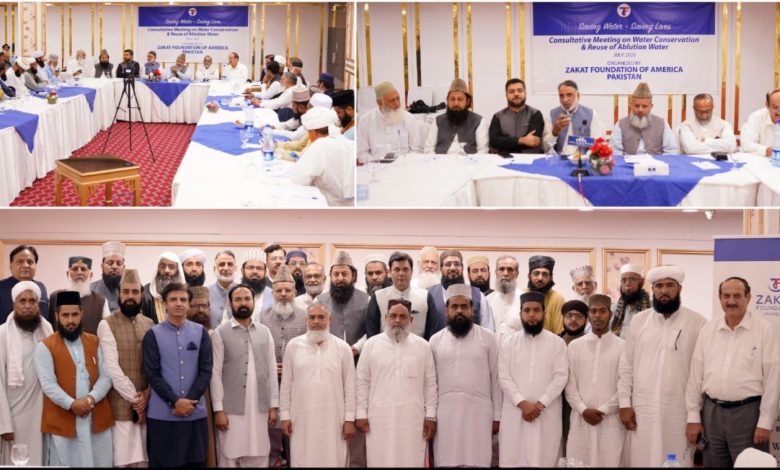
In an unprecedented initiative blending Islamic teachings and environmental responsibility, the Zakat Foundation of America organized a consultative meeting aimed at promoting water conservation, specifically through the reuse of ablution (Wudu) water, in mosques across Pakistan. The gathering united religious scholars, prominent environmentalists, and academic experts to discuss practical measures for sustainable water management and initiate pilot projects.
The consultative session convened in Islamabad and featured a distinguished panel of guests from diverse backgrounds. Attendees included prominent Islamic scholars from various masajid (mosques) and madaris (religious institutions), as well as noted environmental specialists and professors from academic institutions. Among the experts present were environmental activist Dr. Rehan Tahir, Dr. Adil Naseer from Bahria University, and Dr. Irfan Khan, former Dean of the International Islamic University Islamabad.
In his keynote address, the Chief Guest, Dr. Muhammad Raghib Hussain Naeemi, Chairman of the Council of Islamic Ideology, praised this initiative as an essential dialogue between faith leaders and environmental experts. He emphasized that scholars and religious leaders must take an active and influential role in promoting water conservation practices among the public, describing their potential to inspire grassroots change through Friday sermons (Khutbahs) and other religious teachings. Dr. Naeemi expressed his particular appreciation for the significant participation by Ulamah (religious scholars), seeing them as pivotal authorities who can merge spiritual perspectives with environmental awareness effectively.
The event commenced with opening remarks by Dr. Fazal ur Rehman, who underscored the religious and ethical aspects of water preservation. “Water is a divine blessing and a shared responsibility,” he stressed, urging participants and society at large to adopt practical, faith-based approaches to safeguard water as a precious resource for future generations.
During discussions, participants highlighted practical solutions to address the wasteful use and disposal of ablution water. One of the key recommendations was the widespread installation of greywater recycling systems in mosques and religious institutions. Such systems could effectively collect and treat ablution water, subsequently repurposing it for landscaping, sanitation, and other non-drinking purposes. This innovative approach aligns environmental sustainability principles firmly with Islamic teachings regarding responsible resource usage.
One major announcement from the session was the launch of a pilot project targeting Rawalpindi and Islamabad, focusing specifically on implementing advanced rainwater harvesting techniques and practical measures for the reuse and conservation of Wudu water. If the pilot proves successful, organizers intend to replicate the project nationally, potentially influencing broader water conservation strategies across Pakistan.
Mufti Zameer Sajid, a respected member of Pakistan’s Ruet-e-Hilal committee, expressed his support through the guiding theme, “Safe Water, Safe Life.” He articulated that preserving ablution water transcends environmental necessity, calling it “a religious responsibility” that demands community-wide action through wisdom and foresight. Mufti Sajid affirmed that sustaining water is integral to fulfilling religious obligations and ensuring environmental stability.
In bringing together religious leaders and environmental specialists, this consultative session signifies a vital step forward in India combining ecological ethics with Islamic teaching. It represents the start of a transformative journey towards sustainable water use, built upon a foundation of scientific innovation and spiritual responsibility.