Pakistan’s Directorate of Malaria Control has announced promising results from the country’s first-ever pilot project on G6PD testing, successfully implemented across nine malaria-affected districts in collaboration with Medicines for Malaria Venture (MMV) and global partners. The pilot, focused on integrating comprehensive G6PD screening into primary healthcare services, paves the way for Pakistan to adopt the newly-approved malaria treatment drug—Tafenoquine—that significantly simplifies therapy and enhances patient compliance.
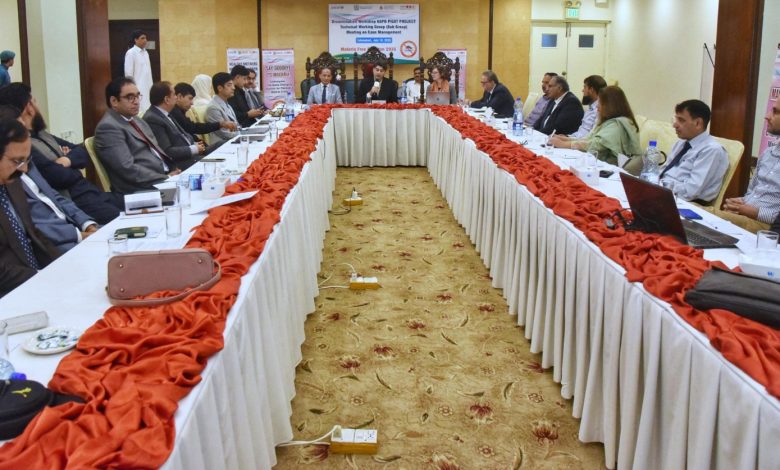
Speaking at a briefing session, Minister of State for Health Dr. Mukhtar Bhirth noted that the landmark pilot project demonstrates the feasibility of incorporating G6PD (Glucose-6-phosphate Dehydrogenase) testing into the primary healthcare system effectively. G6PD deficiency screening is crucial for safe administration of Tafenoquine, which offers distinct advantages over the previously used Primaquine medication.
Dr. Bhirth emphasized that last year’s devastating floods, resulting in more than 2.8 million reported malaria cases, have underscored the urgency and importance of improving malaria treatment strategies nationwide. He confirmed that the outcomes of this pilot initiative will now be aligned with Pakistan’s national malaria elimination strategy.
Explaining the clinical advantages of Tafenoquine, he highlighted that unlike the older Primaquine drug, which required fourteen days of adherence to achieve full recovery, Tafenoquine significantly improves patient compliance, ultimately leading to better treatment outcomes. Poor medication adherence had long been a major obstacle globally, including in Pakistan, as patients often discontinued Primaquine after just two or three days of use, thereby remaining susceptible to malaria relapses.
Following approval by the World Health Organization (WHO) last September, Tafenoquine has already been successfully registered by Pakistan’s Drug Regulatory Authority (DRAP). This key approval positions Pakistan among a limited number of countries that have incorporated this groundbreaking medicine into their national treatment regimens.
According to Dr. Bhirth, the use of Tafenoquine marks a considerable advancement for malaria eradication efforts in Pakistan. He added optimistically that the nation is poised to join the ranks of countries rapidly approaching total malaria elimination.
The pilot project received widespread acclaim from both national stakeholders and international partners, including WHO, UNICEF, the Global Fund, and Medicines for Malaria Venture, which contributed substantially to its implementation and success.
Looking forward, Pakistan plans to host an International Malaria Elimination Conference in 2026. Dr. Bhirth announced that the conference will bring together scientists, healthcare experts, and delegates from across the globe. He described the forthcoming event as an integral part of Pakistan’s commitment toward meeting global standards in malaria elimination.