**Senate Committees Hear Chaman Chamber’s Alarming Concerns Over Border Trade Paralysis at Quetta Meeting**
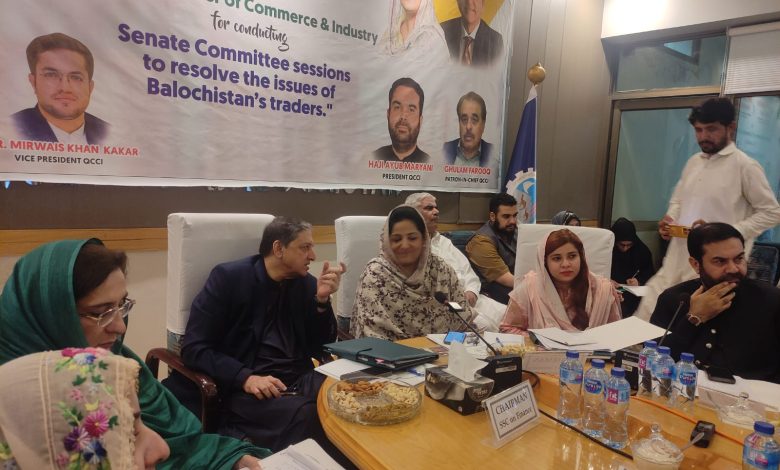
In a high-level joint session held at the Quetta Chamber of Commerce and Industry (QCCI), the Senate Standing Committees on Commerce and Finance & Revenue met with business leaders and government officials to address escalating trade difficulties faced by the border region, with a particular focus on Chaman. Leaders from the Chaman Chamber of Commerce and Industry (CCCI) presented an urgent account of operational and procedural obstacles that are currently crippling commerce along the Pakistan-Afghanistan border.
During the session—chaired by Senator Anusha Rahman and Senator Saleem Mandviwala—CCCI representatives outlined the negative effects of the Barter Trade Mechanism, enacted under SRO 2023. Instead of simplifying cross-border commerce as intended, the mechanism has further complicated matters for traders, largely due to poor coordination among the relevant authorities.
A major concern raised by the Chamber revolved around inadequate customs infrastructure at the Chaman border. The lack of functional scanners and proper customs clearance facilities was cited as a primary cause of delays, resulting in a bottleneck that restricts entry to only a limited number of trucks each day. This, in turn, has led to serious congestion, mounting demurrage costs, and significant financial losses for businesses operating in the area.
Further compounding the challenge is the limited capacity of the NLC Terminal, which cannot accommodate the high volume of traffic. As a result, hundreds of trucks are frequently left idling outside the terminal for extended periods. Drivers and clearing agents face not only hefty penalty charges due to these delays but also endure poor working conditions, with little to no access to shade, clean drinking water, toilets, or rest facilities.
Another persistent issue identified was the absence of an electronic documentation system and the lack of cohesive coordination between Customs and the National Logistics Cell (NLC). These deficiencies undermine transparency and hinder the efficiency of trade operations at the border. The Chamber also noted that the NLC booking counter is located at a site that is difficult for many stakeholders to access, further exacerbating logistical woes.
The CCCI delegation expressed frustration over the non-operational status of the recently constructed Chaman Dry Port, which remains idle despite considerable investments and multiple years of planning. Additionally, they criticized the continued lack of support or facilitation services for traders and clearing agents. The Chamber argued that frequent, unilateral changes in customs procedures, made without consulting trade stakeholders, have only worsened uncertainties and interrupted trade flows.
Senators Anusha Rahman and Saleem Mandviwala assured the business community that the government is committed to addressing these obstacles and leveraging the Senate’s resources to facilitate meaningful solutions. The committee chairs pledged to recommend immediate follow-up action by the relevant government departments, including field visits to the affected sites for on-the-ground assessments.
The meeting concluded with unanimous agreement on the urgent need for a coordinated roadmap. Representatives called for improved inter-departmental collaboration, operational transparency, and active engagement with local stakeholders to revitalize border trade and restore the confidence of traders and investors in the region.