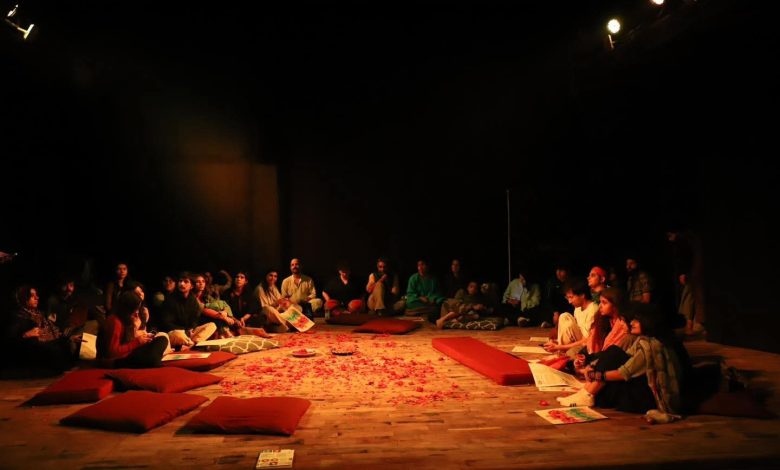
The National College of Arts hosted a public listening session titled Gham-e-Sarkesh with interdisciplinary artist, journalist and folk music activist Ahmadali Kadivar at the Shakir Ali Auditorium. Through an immersive presentation Kadivar examined how sound becomes a vessel for memory, resistance and collective mourning, inviting listeners to engage with music as lived history.
Drawing from the Sedákhāne Iranian Folk Music Library, the presentation wove archival folk recordings with contemporary compositions to demonstrate how music can preserve stories of grief and defiance. Kadivar’s approach foregrounded the textures of archived voices and instruments alongside new sonic responses, highlighting the archive’s capacity to speak across time.
Audience members found the session resonant and affecting, with moments that encouraged reflection on shared histories and communal loss. Gham-e-Sarkesh underscored the power of listening to open spaces for remembrance and political expression, reaffirming folk music’s role in sustaining collective memory and resistance.
By linking archival material with present-day practice, the event at the Shakir Ali Auditorium prompted conversation about preservation, the ethics of archival use and the cultural significance of sound as testimony. Gham-e-Sarkesh positioned artistic listening as a tool for dialogue and remembrance in contemporary cultural life.