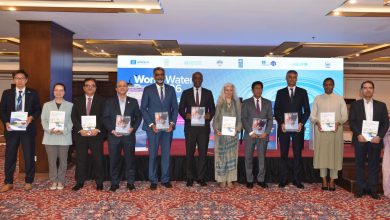
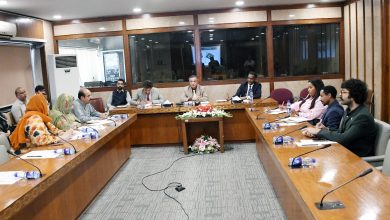
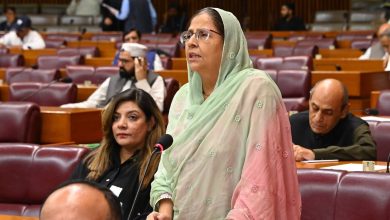
Pakistan is consolidating its role as an emerging partner in global space science, federal Planning Minister Professor Ahsan Iqbal said while addressing the closing session of the international conference on space and technical applications organised by SUPARCO. The minister framed recent progress as the foundation for an accelerated Pakistan space programme that now aims for concrete lunar milestones.
The government has announced a series of near‑term targets that underline this ambition. In 2026 Pakistan plans to launch its first lunar cubesat and will see Pakistani astronauts participate in an international mission the same year. A country‑built moon rover is scheduled for launch in January 2028, and authorities are preparing a roadmap for a full lunar mission to be completed by 2035. These objectives reflect a stepwise approach to expanding Pakistan space capabilities while deepening international cooperation.
Officials describe 2025 as a pivotal year for capability building after a string of successful satellite launches including PakSat‑MM1, EO‑1, a new synthetic aperture system and the HS‑1 hyperspectral satellite. Those systems have enhanced national imaging and communications capacity and provided the technical backbone for applied services across the country.
Data from earth observation technologies has already supported more accurate agricultural planning, informed environmental policy and strengthened response strategies during major floods in 2022 and 2025. Satellite‑enabled connectivity has expanded access to telehealth services, digital classrooms, rural broadband and e‑commerce, illustrating how Pakistan space investments are translating into everyday socioeconomic benefits.
Capacity development remains central to the vision, with the Institute of Space Technology and the National Center for GIS and Space Applications, both established in 2017, training a new generation of engineers, researchers and space scientists. Professor Ahsan Iqbal emphasised that ambitious Pakistan space goals will require sustained national effort and partnerships with international peers, including collaboration across the Islamic world, to realise complex missions and shared scientific gains.