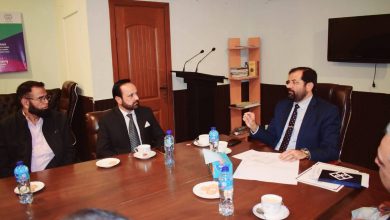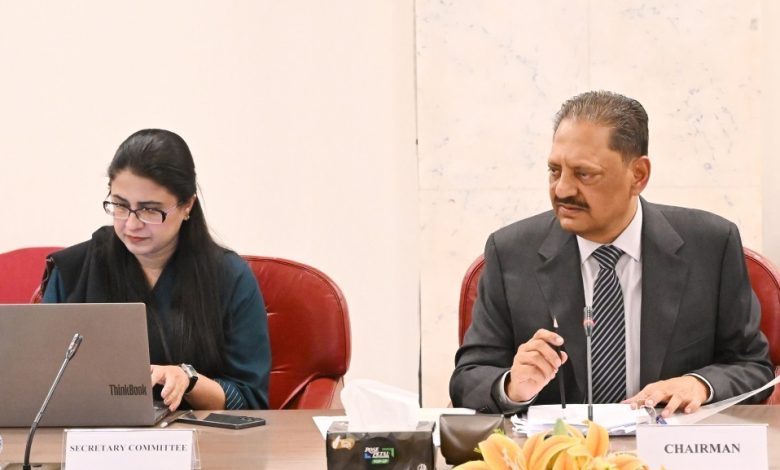
The National Assembly Standing Committee on Commerce, chaired by Mr. Muhammad Jawed Hanif Khan, met to review a Sub-Committee report on the sugar sector and to examine wider trade and investment concerns. The Sub-Committee, after consulting stakeholders, flagged serious irregularities in sugar stock reporting, including misreported quantities, artificial shortages and inconsistencies in official records that have distorted market signals.
Committee members were told that weak monitoring and verification systems, temporary disruptions in tracking mechanisms, ongoing legal cases and administrative constraints have all contributed to the instability now seen in the sugar sector. The Committee underlined the need for structural reforms, stronger governance and greater transparency to protect consumers and restore market balance.
The Committee directed that the Sub-Committee report and its recommendations be forwarded to the Ministry of National Food Security and Research and required the Ministry to submit a formal response within one month. At the same time members asked the Finance Division and the Trading Corporation of Pakistan to provide detailed information on outstanding receivables and pending recoveries arising from public sector procurement, stressing that clear accountability and timely recoveries are essential to prevent future crises.
During the session the Committee discussed the trend of multinational companies scaling back or exiting operations in Pakistan. The Ministry highlighted factors such as over-taxation, high inflation and rising costs of doing business, and noted the Prime Minister has set up private-sector-led committees to propose remedies. The Committee urged active engagement with the business community to help address these challenges and retain investment.
Officials briefed members on progress in trade reforms, including the withdrawal of the EFS surcharge and steps taken concerning infrastructure cess and value addition, while noting persistent difficulties from taxation, production costs and interest rates. The Board of Investment presented an assessment of Pakistan’s investment climate, pointing to both barriers and emerging opportunities that require policy attention.
The Committee also reviewed trade governance and inter-ministerial coordination after identifying discrepancies in historical trade data. The Ministry outlined corrective measures to improve reporting quality, address past inaccuracies and enhance export facilitation. Members discussed reforms related to chambers of commerce, export support mechanisms and inter-provincial coordination to make business operations more efficient and sustainable.
In concluding remarks the Committee emphasised sustained policy stability, transparent governance and reduced costs of doing business as prerequisites for restoring investor confidence, attracting fresh investment and supporting long-term growth. Members reiterated that careful oversight of the sugar sector, combined with coordinated trade and investment measures, will be critical to protect consumers and stabilise markets.
The meeting was attended in person by MNAs Dr. Mirza Ikhtiar Baig, Ms. Kiran Haider, Ms. Shaista Pervaiz, Mr. Asad Alam Niazi, Mr. Farhan Chishti and Mr. Ramesh Kumar Vankwani. The Minister of Commerce and senior officers from the Ministry of Commerce, State Bank of Pakistan, Finance Division and FBR also participated in the deliberations.