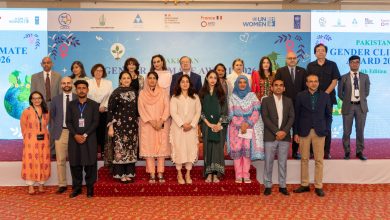
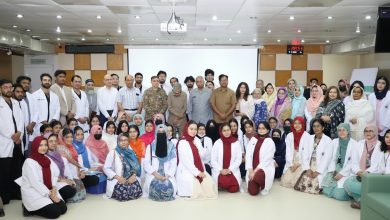
The Higher Education Commission hosted the TDF Impact Showcasing (TIS’25) in Islamabad to present more than 100 technology solutions developed under the Technology Development Fund, highlighting work across health, agriculture, biotechnology, engineering, energy systems, environmental management and emerging technologies. The exhibition brought together government representatives, industry leaders, entrepreneurs and academic innovators to see prototypes and products move toward market readiness.
Out of 238 projects awarded under the Technology Development Fund, 192 are completed and the remainder are under execution. Project achievements include 116 patent filings with 25 patents granted, 48 trademarks and copyrights filed with 13 granted, development of 177 products and prototypes, signing of 162 technology licenses, and the emergence of 18 startups and spin-offs. The programme has also produced 330 research publications, 241 of which appeared in impact factor journals, and trained more than 5,600 professionals.
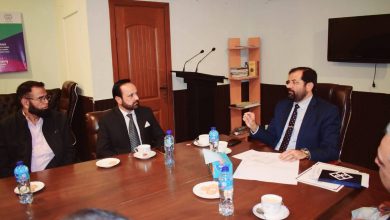
Nadeem Mahbub, Chairman HEC, described TIS’25 as proof of the potential that a strong partnership between academia and industry holds for Pakistan. He emphasised the mission of the Technology Development Fund to convert ideas into market-ready solutions and to position universities as drivers of socio-economic development, while reinforcing the Triple Helix model of government, industry and academia working together.
Imtiaz Ali Rastgar of Rastgar Group highlighted the role of sustained execution in delivering technological progress and urged stronger business education, entrepreneurship profiling, and export-focused skills to remove industrial hurdles in both urban and rural contexts. He underscored the value of HEC initiatives such as ORICs and Business Incubation Centres in strengthening university-industry linkages.
Dr. Zia Ul Haq, Executive Director HEC, reiterated the call for industry to open doors to academia so that research moves beyond publications into tangible products that support national development. Advisor Research & Innovation Division Dr. Muhammad Ali Nasir noted that the TDF was designed to bridge the gap between academic research and industry needs, and that the PC-I for TDF Phase II has been prepared for government consideration.
Launched in 2016 with an initial PSDP allocation of Rs. 2.9 billion, the Technology Development Fund has become a platform for transferring knowledge from universities to the market and has been extended through June 2027 in recognition of its impact. Organisers urged stakeholders to scale proven technologies, forge new partnerships and deepen industry-academia collaboration to sustain Pakistan’s innovation momentum.