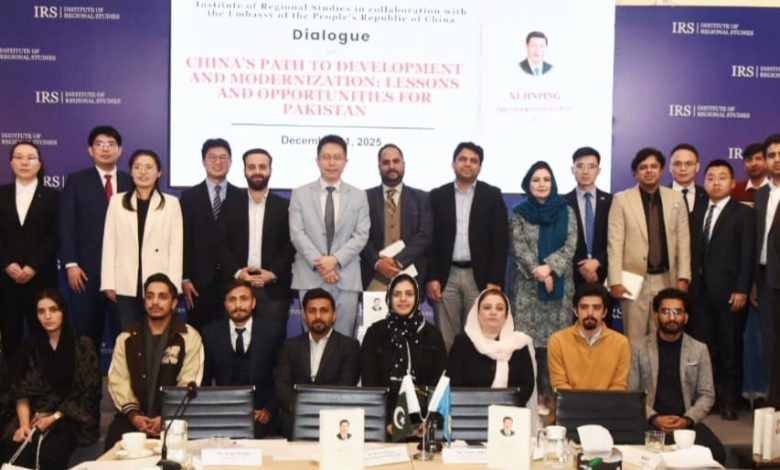
The Institute of Regional Studies, together with the Embassy of the People’s Republic of China, convened a high-level dialogue in Islamabad to assess China’s path to development and the opportunities it offers Pakistan. The session brought Chinese diplomats, Pakistani scholars and emerging influencers into a detailed exchange on long-term planning, governance and economic cooperation within the China Pakistan partnership.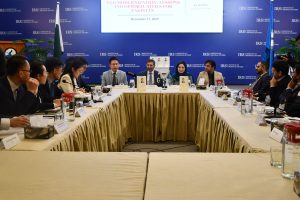
The Chinese delegation was led by Mr. Wang Shengjie, Counselor, and included Mr. Zhang Duo, Attaché; Mr. Yang Taofei, Attaché; Ms. Wang Yiqiu, Third Secretary; Mr. Li Zhen, Third Secretary; Mr. Zhang Datuo, Second Secretary; Ms. Jiang Lezan, Third Secretary; and Mr. Zhang Pengfei, Attaché. Pakistani panelists comprised experts such as Dr. Usman Chohan, Mr. Zeeshan Ahmed, Dr. Furqan Rao, Dr. Mehmood Hassan, Mr. Tahir Dhindsa, Barrister Zopash Khan and Mr. Assadullah Khan, who engaged the delegation on governance and policy pathways relevant to Pakistan.
Ambassador Jauhar Saleem, President of the Institute of Regional Studies, highlighted China’s achievements in poverty reduction, rapid economic growth and institutional modernization, noting that China’s Five-Year Plans offer practical lessons for countries pursuing inclusive development. A central element of the dialogue was a discussion around the fifth volume of Xi Jinping The Governance of China, published in July 2025, which compiles 91 speeches and writings from May 2022 to December 2024 and outlines thematic priorities and governance approaches that shaped recent Chinese policy.
Delegates emphasized people-centered governance and diplomacy, reforms within the Communist Party of China, and strategic initiatives such as the Belt and Road Initiative. Participants examined China’s modernization drive toward 2035 and previewed the upcoming Five-Year Plan for 2026-2030, focused on high-quality development, self-reliance in technology, boosting domestic consumption and wider openness for global trade—areas with direct implications for deeper China Pakistan collaboration.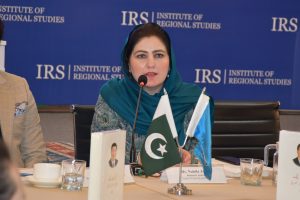
Pakistani experts pointed to the value of consistent national policies, competence-based education and inclusive decision-making. The dialogue explored actionable ways Pakistan can benefit from China’s experience in long-term planning, targeted technological investment and policy continuity to accelerate industrial development and expand bilateral trade under frameworks such as CPEC.
The session closed with a reaffirmation of the enduring China Pakistan partnership and a shared commitment to modernization, cultural exchange and mutual progress, underscoring practical steps to translate the dialogue into collaborative projects and stronger economic ties.