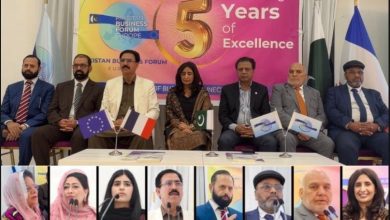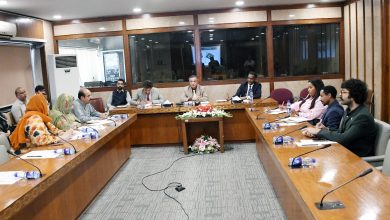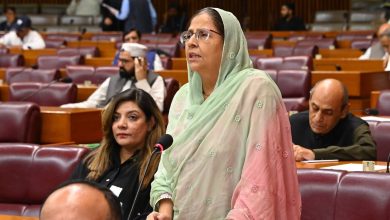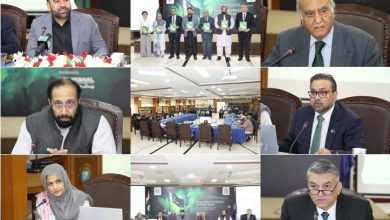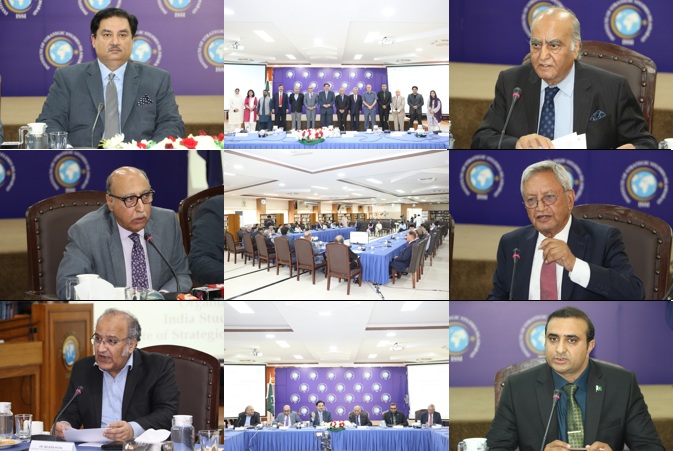
The India Study Centre at the Institute of Strategic Studies, Islamabad convened a seminar on May 16, 2026 to assess the future trajectory of Pakistan India relations, bringing together former ministers, ambassadors and academics to debate risks and practical paths forward.
Ambassador Khalid Mahmood, Chairman ISSI, opened the discussion by noting the long mix of conciliation and confrontation that has defined bilateral ties. He said New Delhi’s attempts to politically isolate Pakistan have begun to provoke reappraisal within Indian policy circles, but cautioned that the Indian military’s continued belligerent rhetoric requires Islamabad to proceed cautiously. Ambassador Mahmood urged a measured, structured dialogue rather than hasty engagements.
The chief guest, Engr. Khurram Dastgir Khan (HI), highlighted three diplomatic gains Pakistan secured amid recent US‑Iran tensions: enhanced goodwill from the United States, growing international legitimacy, and the ability to conduct complex diplomacy on multiple fronts. He stressed using these advantages as leverage in talks with India while warning that unresolved issues — Jammu and Kashmir, reciprocal terrorism allegations, rising domestic nationalism in India, nuclear considerations and friction over the Indus Waters Treaty — could still drag both countries back toward confrontation. He singled out water‑sharing tensions as a particularly dangerous flashpoint.
Dr. Khurram Abbas of ISSI’s India Study Centre described Pakistan India relations as among the most-watched bilateral ties globally and argued that the current period represents one of the worst in recent memory, with settled issues such as water sharing becoming new sources of hostility. He called on academics, policy practitioners and civil society to build on a broader appetite for peace and to help guide both capitals out of the present stalemate.
Ambassador Abdul Basit expressed scepticism about recent Indian overtures for engagement, saying from New Delhi’s perspective this may not be the right time for a breakthrough. He stressed that Pakistan must prioritise its national interests and long‑term objectives, and warned that Confidence Building Measures are effective only when paired with mechanisms to address core issues, including Jammu and Kashmir.
Dr. Manzoor Ahmed warned that trade has been one of the heaviest casualties of the crisis. Pakistan’s ban on direct trade with India forces reliance on indirect routes and raises import costs. Citing a World Bank figure, he said Pakistan could potentially earn US$38 billion from exports to India, which would significantly boost overall exports, and urged policymakers to decouple trade relations from long‑standing political disputes to realise economic benefits.
Dr. Mujeeb Afzal provided a historical overview of competing narratives over Jammu and Kashmir, arguing that the dispute is tightly woven into both countries’ national identities and therefore costly to reverse. He noted that India’s decision to put the Indus Waters Treaty in abeyance adds another layer of complexity and observed that, given current dynamics, durable constructive engagement and long‑term peace remain difficult to achieve.
The seminar concluded with a rigorous question and answer session that reflected serious concern across the spectrum about escalating tensions and the need for a deliberate, structured approach. Participants repeatedly emphasised the value of measured diplomacy, economic pragmatism and multilateral engagement to reduce risks and create space for addressing core disputes in Pakistan India relations.