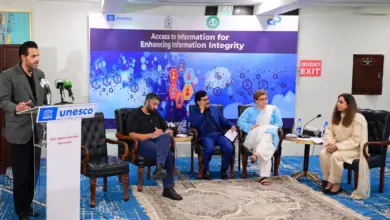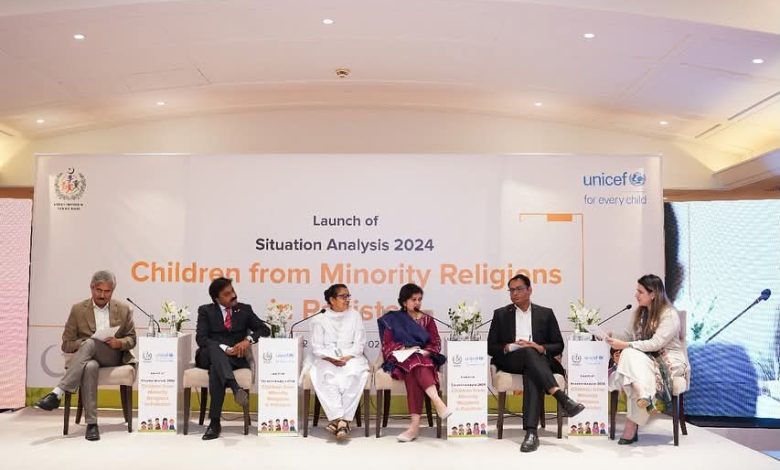
The launch of the Situation Analysis of Children from Minority Religions in Pakistan featured a panel discussion that examined pressing child rights concerns facing minority children and called for concrete steps to ensure equality and dignity for every child. Moderated by Maham Afridi, Program Coordinator at the National Commission for Rights of Children, the session brought together representatives from government bodies, civil society and international partners to reflect on barriers to inclusion.
Albert David, a member of the Minorities Commission of Pakistan, argued that true equality requires moving beyond the minority versus majority divide and building a shared Pakistani identity so that every child grows up with a secure sense of belonging. He emphasized that efforts to support minority children must reinforce national cohesion rather than entrench differences.
Zeeba T. Hashmi, an education research consultant, urged that religious instruction be a matter of choice and proposed comparative religious studies in early education to promote understanding and harmony between communities. Making religion optional and teaching about diverse beliefs, she said, can help reduce prejudice and create more inclusive classrooms for minority children.
Arshad Mahmood, deputy team lead for Aawaz 2 at the British Council, noted that while non-discrimination policies and quotas are in place, poverty and social exclusion often prevent minority children from accessing these opportunities. He highlighted the need for targeted measures to reach marginalized families so policy provisions translate into real access to education and services.
Sister Mariam Parveen of the National Commission on the Status of Women drew attention to the compounded discrimination faced by girls from minority communities. She described how social exclusion in schools—children being denied shared water, segregated seating or exclusion from festivities—harms confidence and dignity and complicates responses to their specific needs.
Pirbhu Lal Satyani, member of the Sindh chapter of the National Commission for Religious and Cultural Rights, warned that poverty, isolation and exploitation are consequences of systemic inequality affecting minority children. He stressed that addressing these harsh realities requires coordinated action across government, civil society and development partners.
The panelists collectively urged urgent steps toward inclusive education, equal opportunity and respect for every child without distinction. They called on government agencies, UNICEF Pakistan and other partners to translate recommendations from the report into policies and programs that remove barriers and uphold the rights of minority children across the country.