Pakistan Faces Population Crisis as Growth Rate of 2.55% Declared a “National Emergency”
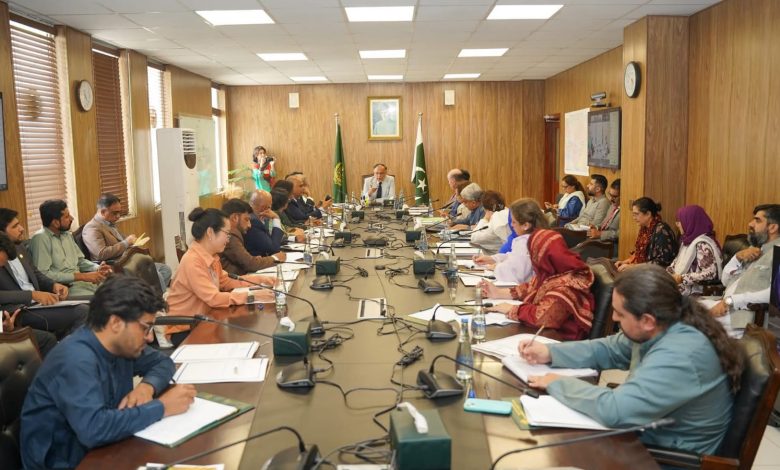
Pakistan’s rapid annual population growth rate of 2.55 percent has been declared a “national emergency,” as projections indicate the nation’s population will surpass 386 million by the year 2050. Addressing an urgent high-level meeting convened on directions from Prime Minister Shehbaz Sharif, Federal Minister for Planning, Development, and Special Initiatives, Professor Ahsan Iqbal highlighted alarming statistics from the 2023 Digital Census, noting a staggering increase of over 33.8 million people since 2017.
Minister Ahsan Iqbal emphasized the gravity of the issue, pointing out key social indicators that illustrate the current population crisis. According to data presented during the conference, an alarming 40 percent of Pakistan’s population have never attended school, severely limiting national human resource potential. Additionally, only 25 percent of women currently participate in the labor force. Health indicators presented by UNICEF painted an equally grim picture, noting that approximately 30 newborn children tragically lose their lives every hour, while maternal mortality statistics reveal that a mother loses her child every 50 minutes.
To effectively manage and tackle this emergency, Minister Ahsan Iqbal proposed establishing a powerful “National Population Commission,” to be chaired by the Prime Minister and comprising chief ministers from all four provinces. This proposed commission would ensure coordinated policies, define measurable objectives, and facilitate strategic actions at a national level.
During the meeting, Federal Minister Ahsan Iqbal also identified several significant obstacles currently obstructing population control measures. He pointed out that the current National Finance Commission (NFC) Award formula inadvertently rewards provinces for higher population growth, thus undermining efforts aimed at stabilizing and balancing population growth rates.
The new commission would seek to revise existing financial distribution formulas and policy incentives, ensuring efforts at population control become more effective and sustainable. Among other targeted measures proposed, the Ministry of Planning committed to launching extensive awareness campaigns aimed particularly towards rural women, using platforms such as utility stores, basic health centers, and markets. Comprehensive outreach through social media, community health workers, digital platforms, and religious leaders would also be employed to promote open discussions, sensitively handle cultural topics, and establish public trust in population-control strategies.
Highlighting the broader implications, Minister Ahsan Iqbal stated, “The population issue is not just an issue of health, but also critically linked to education, employment opportunities, and economic stability. Immediate and coordinated action is imperative.”
The high-level meeting was attended by notable participants including Federal Minister for Health Mustafa Kamal, Minister for Religious Affairs Sardar Muhammad Yousaf, Minister for Information Attaullah Tarar, Senator Rubina Khalid, Chairperson Benazir Income Support Programme (BISP), Senator Sherry Rehman, representatives from UN agencies including UNFPA, WHO, UNICEF, provincial government officials, and experts from the Population Council and Planning Commission.