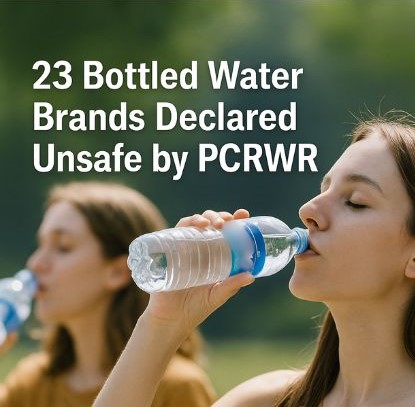
The Pakistan Council of Research in Water Resources (PCRWR) has declared 23 bottled and mineral water brands unsafe for human consumption after an extensive round of testing across the country. The agency’s latest quality report highlights significant chemical and microbiological contamination in these brands, posing serious health risks to the public.
Acting on government directives to monitor bottled water supplies, PCRWR collected 203 samples from 21 major cities across Pakistan. The evaluation was part of the agency’s quarterly assessment protocol, designed to ensure bottled water meets the standards set by the Pakistan Standards and Quality Control Authority.
PCRWR’s analysis identified 11 brands with dangerously high sodium content, which can be particularly harmful for people with hypertension and heart problems. The affected brands are New Mehran, Aqua 111, Nice Pure Max, Pure Drinking Water, Logic, Himalya Cool, Natural Pure Life, Natural, Forever Bottled Drinking Water, Drinkly Pure Drinking Water, and Qudrat Water.
Four brands—Atco Drinking Water, Aqua Nest, Pani, and New Mountain—were found to contain arsenic levels exceeding permissible limits. Long-term exposure to arsenic can lead to severe health issues, such as skin disorders, various forms of cancer, and cardiovascular diseases.
Vey Forever, another tested brand, was flagged for containing potassium above safe levels. Although potassium is necessary in moderate amounts, excessive intake poses risks, especially for individuals with kidney conditions.
The report also revealed that nine brands were contaminated with harmful bacteria, which can cause gastrointestinal and other infections. These brands are Noble Pure Drinking Water, Aqua 111, Clear, Wah Water, Nice Pure Max, Aqua King Bottled Water, Maa Jee, Freshin Drinking Water, and Iceland.
PCRWR has urged consumers to consult the detailed findings available on its official website to make informed choices when purchasing bottled water. The council has reaffirmed its commitment to regular monitoring in order to protect public health and ensure access to safe drinking water.