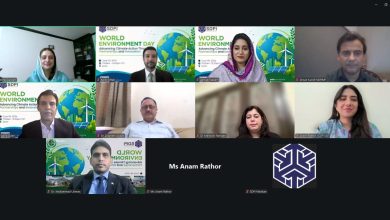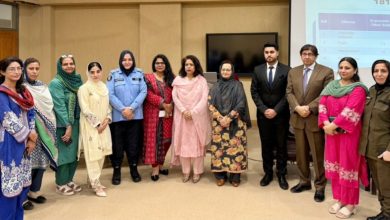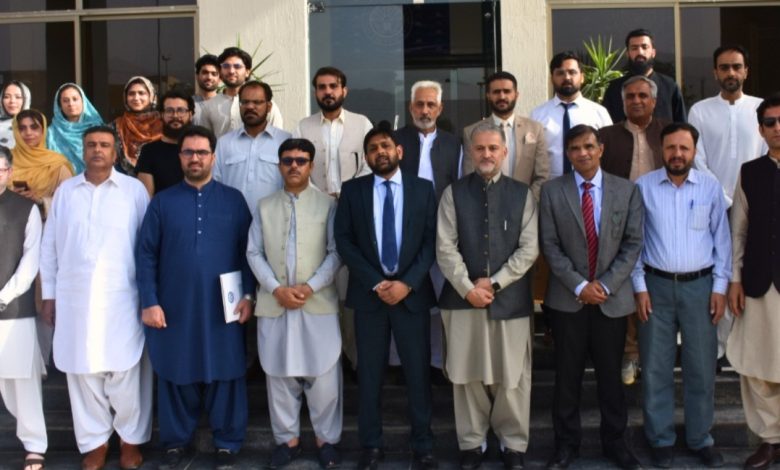
A high-level roundtable on decentralized energy solutions was recently held at the NUST Balochistan Campus in Quetta, bringing together academic leaders, government officials, and energy experts to discuss strategies for expanding clean energy access across the province. Organized jointly by the U.S.–Pakistan Center for Advanced Studies in Energy (USPCAS-E), NUST, and the Institute for Development Studies and Practices (IDSP), the event focused on leveraging Balochistan’s solar and wind potential to address acute energy and water challenges.
Professor Dr. Adeel Waqas, Principal of USPCAS-E NUST, opened the discussions by highlighting how combined photovoltaic and solar thermal systems could power Balochistan’s agriculture sector, water pumps, and essential community services. He stressed the need for a supportive policy framework to guide sustainable, decentralized energy deployment across the province’s vast landscapes.
Dr. Mughees Aslam, Director and Dean at NUST Balochistan Campus, emphasized the role of solar energy in using Balochistan’s rich mineral resources to drive regional growth. Mr. Safdar Hussain, Director at IDSP, underscored the importance of decentralized energy solutions for community development, particularly initiatives targeting youth and supporting energy transitions.
Ms. Mamoona Nabi, a senior research associate at IDSP, presented data on Balochistan’s severe energy and water issues and introduced a solarization initiative designed to support local farmers. She highlighted significant crop losses and infrastructure shortfalls caused by unreliable energy supplies.
The first session, moderated by Dr. Majid Ali of USPCAS-E NUST, brought together faculty from several regional universities who advocated for strong lifecycle assessments, effective e-waste management, and governance models that involve local communities. Innovations discussed included microgrid design, dust-resistant cleaning technologies, and specialized training to ensure long-term system performance. Recommendations called for community-driven microgrid projects supported by inventive financing and monitoring solutions.
Showcasing completed research from USPCAS-E, Mr. Syed Shabbir Ahmed and Mr. Muhammad Zeeshan Shabbir (both Research Associates at USPCAS-E NUST) highlighted practical applications being piloted in the field. Faculty from academic departments across Balochistan also contributed insights on environmental, physical, and mining engineering disciplines.
In a subsequent session, government officials unveiled ambitious targets, including the conversion of agricultural tube wells to solar power, electrification of off-grid schools and health units, construction of check dams and groundwater recharge wells, and the deployment of three 50 megawatt utility-scale solar plants alongside five 5 megawatt microgrid projects. Officials presented new resource maps that showcased Balochistan’s abundant solar and wind energy capacity.
Leaders from provincial departments of energy, agriculture, irrigation, and climate change participated, along with representatives of the local farming community. The event concluded with acknowledgments to those who helped organize the roundtable and to faculty members whose expertise and support made the initiative possible.
The roundtable marks a significant collaborative step towards sustainable, community-driven energy solutions in Balochistan, aligning technical innovation with government policy and grassroots development.