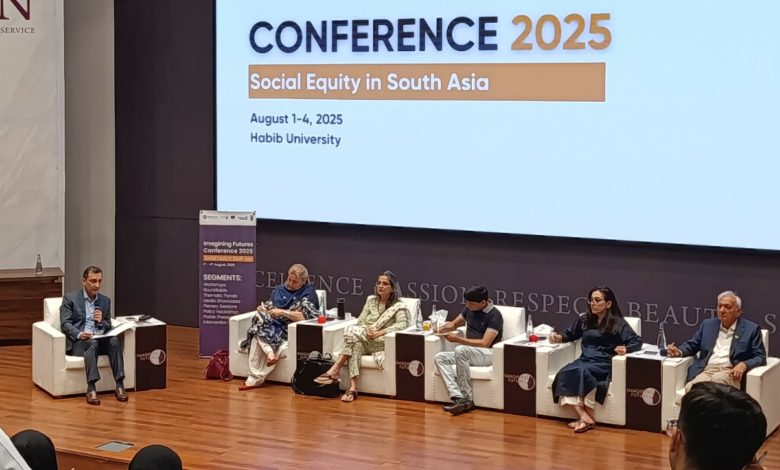
At the Imagining Futures Conference in Karachi, experts and stakeholders highlighted the pervasive issue of systemic injustice in Pakistan, calling for comprehensive reforms in the country’s legal and civil institutions. The conference, hosted at Habib University, brought together participants from diverse backgrounds to discuss the state of human rights and civil liberties.
During a plenary session, National Commission for Human Rights (NCHR) Chairperson Rabiya Javeri emphasized the importance of public awareness about individual rights, describing knowledge as a critical form of capital. However, she pointed out that awareness alone is not enough due to severe systemic shortcomings that fail to guarantee protection, especially for vulnerable groups. Addressing the audience’s concerns about high-profile cases such as the murders of Benazir Bhutto and Noor Mukadam, Javeri argued for an integrated approach that includes strengthening educational, financial, and judicial systems to truly empower citizens.
Javeri highlighted the chronic underreporting of sexual violence, revealing that only 41 percent of rape cases are reported, with many victims ultimately withdrawing due to intense social pressure. She cited a recent report showing that only 0.5 percent of rape cases result in conviction, reflecting profound failures in the legal process. These statistics underline the urgent need for responsive systems and comprehensive human rights impact assessments in government projects, as well as systematic consideration of gender in budget planning.
The session also explored the role of service providers like lawyers, courts, police, and teachers in upholding human rights. Javeri asserted that human rights are inalienable and must be robustly protected within the country’s institutions. She further illustrated the human cost of systemic inadequacies through a case handled by the NCHR, in which a mother had her adult daughter abducted and sent to a rehabilitation center simply because the daughter chose not to marry, kept cats, and was declared “depressed” by an unqualified individual.
Through these discussions, experts at the conference underscored the critical need for better regulation within mental health care and more effective oversight to prevent abuse of vulnerable individuals. The stories shared and data presented painted a stark picture of the challenges faced and reinforced the call for holistic reform to ensure justice and dignity for all Pakistanis.