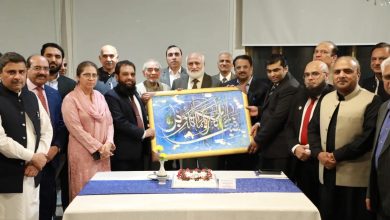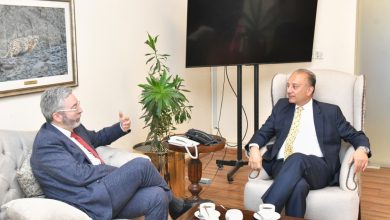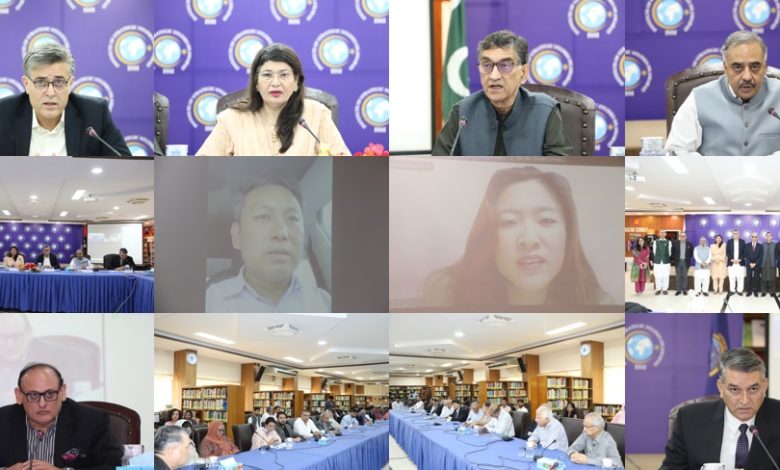
The Institute of Strategic Studies Islamabad (ISSI) hosted a seminar focused on the Shanghai Cooperation Organization’s (SCO) “China Year 2025,” highlighting the organization’s growing global influence and commitment to multilateral cooperation. The event brought together diplomats, academics, and experts to discuss SCO’s evolving role under China’s ongoing presidency and the principles known as the ‘Shanghai Spirit’—mutual trust, dialogue, and collective development.
The seminar opened with remarks from Ambassador Sohail Mahmood, Director General of ISSI, who emphasized the SCO’s transformation into a major platform for international cooperation. He noted that, in a world marked by rising geopolitical tensions, the SCO’s commitment to dialogue and consensus offers a viable alternative to confrontation. He pointed to China’s presidency as particularly proactive, with Foreign Minister Wang Yi’s five-point roadmap focusing on solidarity, security, economic collaboration, and equitable global governance. Mahmood expressed optimism that the upcoming SCO Summit in Tianjin would adopt a long-term development strategy, further cementing the organization’s role in promoting stability and prosperity across Eurasia.
Ambassador Farhat Ayesha, Pakistan’s National Coordinator for the SCO, delivered the keynote address, describing 2025 as a pivotal year for the organization. She praised China’s leadership in expanding the SCO’s agenda to include poverty alleviation, climate resilience, the digital economy, and enhanced regional connectivity. Ayesha also noted Pakistan’s longstanding commitment to the SCO, underscoring how its participation aligns with the country’s broader foreign policy goals and international obligations.
Ambassador Babar Amin, former National Coordinator for the SCO, highlighted China’s crucial support in integrating Pakistan into the organization and lauded cooperation in areas identified under President Xi Jinping’s Global Development Initiative. He viewed the upcoming Tianjin Summit as a landmark event, set to bring together the largest-ever gathering of SCO members.
Experts from China—including Dr. MA Bin from Fudan University and Dr. Ma Zheng from Sun Yat-sen University—stressed the importance of strengthening security, economic ties, and youth engagement as the SCO enters a new era of heightened global competition. Dr. Ma Zheng further outlined four pillars guiding SCO’s growth: security, mutual development, good neighbourly relations, and fairness in international affairs. Dr. Hassan Daud Butt from Pakistan acknowledged the organization’s resilience in a fragmented global landscape and welcomed recent steps toward greater regional connectivity, such as the Azerbaijan-Armenia peace pact.
Guest of Honor Ambassador Khalil Hashmi, Pakistan’s Ambassador to China, reiterated the SCO’s increasing significance as a platform grounded in the Shanghai Spirit. He noted that under President Xi Jinping’s leadership, the organization has gained new momentum in areas such as digital transformation and sustainable development, while also playing a vital role in countering terrorism and extremism. Hashmi highlighted the China-Pakistan Economic Corridor (CPEC) as a model for broader regional integration, reaffirming the close diplomatic relationship between Pakistan and China.
Dr. Talat Shabbir, Director of the China-Pakistan Study Centre, earlier stressed the SCO’s vital role in maintaining regional stability and promoting economic and cultural cooperation. The seminar concluded with an interactive session attended by representatives from the diplomatic corps, academia, business community, and the media, underscoring widespread interest in the future direction of the SCO.