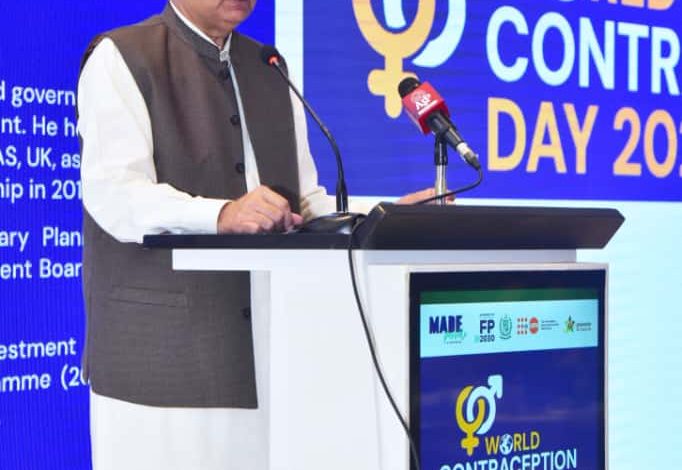
Government officials, development partners, youth leaders and health experts met in Islamabad to observe World Contraception Day 2025 and reinforce Pakistan’s drive to expand access to contraception and reproductive health services. The event carried the global Made Possible by Family Planning message and adopted the national theme Plan It. Own It: Reproductive Rights for Everyone.
Hamed Yaqoob Sheikh, Federal Secretary of the Ministry of National Health Services, Regulations and Coordination, framed contraception as a fundamental human right and reiterated Pakistan’s FP2030 commitments to raise modern contraceptive prevalence, reduce unmet need, and ensure universal access to quality services. His remarks emphasized that advancing family planning is central to protecting reproductive choice and dignity for all citizens.
Dr. Shabana Saleem, Director General Population, spoke about the role of family planning in promoting better health, stronger education outcomes and sustainable economic growth, noting that informed reproductive choices enable long-term social and development gains. Representatives from FP2030 and the Asia Pacific Hub highlighted Pakistan’s progress while calling for renewed focus on equity and inclusion so that no communities are left behind.
A short film screened at the event illustrated the health, social and economic benefits of family planning and reinforced how investment in reproductive health unlocks opportunities for women, youth and families. FP2030 speakers shared international best practices and urged innovative, youth-centred and rights-based approaches to overcome barriers to contraceptive access across Pakistan.
The panel moderated by the CEO of Greenstar brought together the UNFPA Country Representative, a member of parliament, a youth advocate, the Health Services Academy vice chancellor and senior ministry officials to discuss strengthening family planning through evidence, equity and innovation. Panelists stressed inclusive policy-making, increased financing for health systems, and meaningful youth engagement as essential steps to widen access.
An interactive session led by experts from PRHPS addressed myths and misconceptions about contraception, equipping participants with evidence-based responses to counter stigma and misinformation in communities. The dialogue underlined the importance of accurate information and trusted health services in supporting reproductive rights.
The event concluded with a collective call to action reaffirming the government’s commitment to universal family planning services. Speakers urged cross-sector collaboration, continued political will and sustained investment to ensure reproductive rights for everyone in Pakistan and to make clear how family planning makes healthier families, empowered women and resilient communities possible.