Industry experts, policymakers and civil society representatives convened in Islamabad to push for accelerated adoption of solar textiles and deeper reforms in multilateral development bank (MDB) financing to help Pakistan respond to climate and economic pressures.
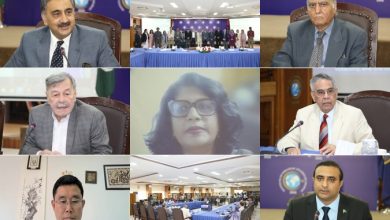
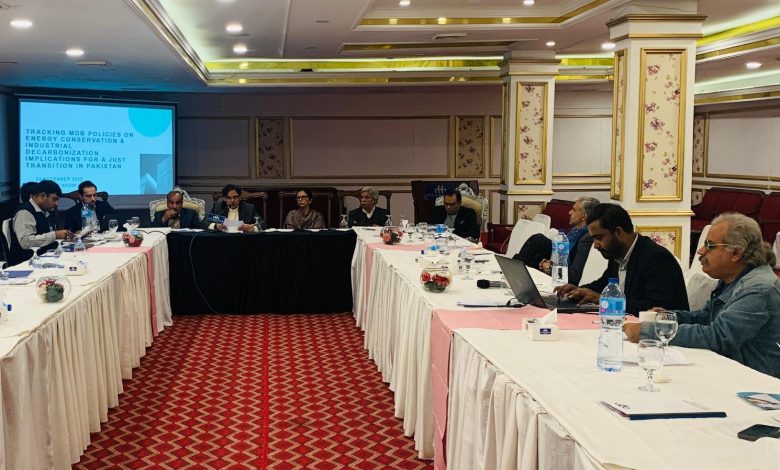
The seminar, organised by Alternate Development Services and hosted by ADS CEO Amjad Nazeer, drew over 50 participants from government, industry and academia. Speakers stressed that aligning MDB support with national priorities and prioritising solar textiles can reduce fossil fuel reliance, improve export competitiveness and speed industrial growth.
Dr. Ali Abbas Kazmi of NUST and Usman Bin Ahmad of ADS presented a scoping study based on primary data from 80 textile mills in Faisalabad and Multan and mapping 82 textile industries with 237 MW of installed solar capacity. Their techno‑economic modelling showed centralised solar scenarios could reach roughly 87% renewable fractions with the lowest levelised cost of electricity, while distributed solar models deliver faster paybacks for individual firms.
The study projects annual greenhouse gas reductions of 1.6-1.76 billion kg CO2 and highlights implications for compliance with the EU Carbon Border Adjustment Mechanism (CBAM). Policy recommendations included tiered wheeling charges, incentives for solar‑plus‑storage, and a Green Market Stabilisation and Blended Fund to de‑risk private investment in solar textiles.
Research tracking MDB policies for a just transition, led by Twangar Kazmi, compared World Bank and Asian Development Bank country frameworks with Pakistan’s NDC 3.0, IGCEP and national energy policies. While alignment exists directionally, the analysis flagged gaps in measurable metrics, sequencing of reforms, institutional capacity and safeguards for a just transition. A case review of the Punjab Green Development Program scored just 45% alignment and underlined weak MRV systems.
Panel discussions examined regulatory and market barriers to scaling solar textiles. In a session on the Competitive Trading Bilateral Contract Market, panellists highlighted high Use of System Charges and legacy power purchase agreements that constrain new solar connections. Kohinoor Textile Mills presented a hybrid solar case study that illustrates SME pathways to decarbonisation under global pressures such as CBAM.
The MDB priorities session critiqued the current financing mix, noting that roughly 70% of climate flows arrive as loans rather than grants and can trap debt‑stressed countries. Speakers urged parliamentary debt audits, reframing climate finance as climate justice, and greater grant‑based support to avoid worsening Pakistan’s repayment burdens. Calls for civil society‑led MDB scorecards, multi‑stakeholder working groups and readiness for Article 6 carbon markets were made to bridge policy gaps.
Amjad Nazeer thanked participants and underlined the need for coordinated policy action to steer MDB financing toward inclusive decarbonisation. “Our studies provide an evidence base to steer MDB financing toward inclusive decarbonisation,” he said, urging prioritisation of grants to avoid deepening the country’s external repayment pressures.
The event closed with an interactive session and commitments to joint advocacy on provincial integration, SME support and accessible knowledge sharing to advance solar textiles across Pakistan’s export sectors.