Blood, Soil, and Broken Cradles: The Silent Screams of Shikarpur
Marvi Mustafa (Lecturer, PHD Scholar)
In the dust-blown reaches of Upper Sindh, the value of a human life has been reduced to the letters of a surname. In Shikarpur, the names Mahar and Jatoi are no longer just markers of ancestry; they have become death sentences or badges of a burden no soul should have to carry.
While the state discusses “security protocols” and “strategic interests,” thousands of families are living in a permanent state of mourning. This is not a war of choice; it is a war of inheritance.
The Weight of a Name: To be born into this feud is to be born into a debt of blood. We often hear the statistic thousands dead but we don’t hear the silence of the abandoned classrooms in Lakhi or the ghost towns near the riverine forests.
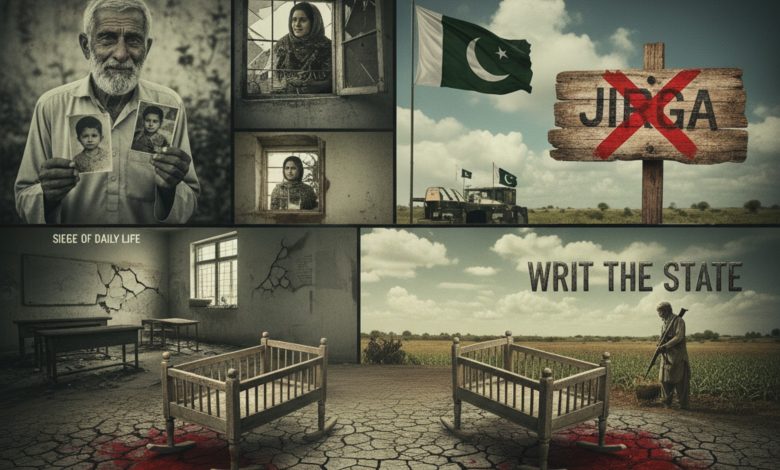
The Inheritance of Grief: In the homes of both Mahars and Jatois, the most common heirloom is not jewelry or land, but a photograph of a father or brother who never came home.
The Siege of Daily Life: For a mother in this region, a simple trip to the market is a tactical maneuver. Every motorcycle engine that revs too loudly causes a heart to skip a beat. Every knock on the door after sunset brings the fear of a “revenge squad.”
The Case for a Compassionate Intervention: Traditional policing has failed because the police are seen as part of the system that allows these feuds to fester. The people of Shikarpur don’t need another “operation” that ends in a week; they need a shield.
To humanize the role of the Armed Forces, the intervention must be seen as a humanitarian rescue mission:
Breaking the Monopoly of Fear: The Army must establish a presence that is more accessible than the tribal Sardar. When a military post becomes a place where a common man can seek justice without being asked his tribe, the cycle of revenge begins to break.
Education as De-escalation: The Armed Forces should lead the “Schooling the Sindh” initiative. By providing security to teachers and students, the state can ensure that the next generation of Mahars and Jatois meet in a classroom rather than on a battlefield.
Economic Healing: The military’s engineering wings can help reclaim the agricultural lands that have been abandoned due to the feud. When a farmer can finally harvest his crop without a rifle slung over his shoulder, peace becomes a tangible, profitable reality.
The Tragedy of the “Jirga”
For too long, the state has outsourced justice to jirgas. But these councils often treat murder as a financial transaction. To the families involved, this feels like a betrayal. A human life isn’t a debt to be settled with a fine; it is a void that never fills.
True peace requires the Armed Forces to act as the iron fist in a velvet glove disarming the violent while protecting the vulnerable. They must ensure that the “writ of the state” isn’t just a phrase, but a promise that no child will ever again be handed a gun to settle a grandfather’s debt.
A Plea for the Living: The soil of Shikarpur is stained red, not by the sun, but by the stubbornness of a system that refuses to change. As we look toward 2026, the question isn’t how many more will die, but how many we will allow to live. The Mahar and Jatoi families are tired of burying their children. They are waiting for a power greater than the Sardar to tell them that their lives, regardless of their name, finally matter.